


Alpine Chevrolet – 2026 Chevrolet Silverado 2500 HD Trailering Tech That Works Around Commerce City, CO
Heavy-duty towing is as much about confidence as it is about capacity. The 2026 Chevrolet Silverado 2500 HD builds confidence into every step of the process, from setting up your trailer profile to watching a near-seamless live view behind your rig on busy corridors near Commerce City. If your daily drive includes I-270, Highway 2, or worksite detours near the rail yards, a smarter camera system and a thoughtful in-cab trailering app can turn a complex towing day into a predictable routine.
In this guide, we highlight the Silverado 2500 HD trailering tech that genuinely solves everyday challenges—lining up on uneven gravel, keeping tabs on traffic when your trailer blocks the rear window, and verifying cargo in the bed without climbing up to double-check. It is the kind of tech that gets out of the way and simply helps.
What the camera system gets right
Up to 14 available camera views give you targeted angles for hitching, merging, and maneuvering. Hitch View provides a close-up line-of-sight to the ball so you can back up smoothly, while the available Transparent Trailer View is a standout—showing a near see-through look behind a compatible trailer. For long trailers that may otherwise overwhelm your side mirrors around Sable Boulevard or Vasquez Boulevard, that clarity is invaluable.
HD Surround Vision can assemble a bird’s-eye composite when you are threading through tight lots or staging areas. Bed View helps confirm strap placement or check a fifth-wheel connection point in seconds. It is the difference between guessing and knowing—especially helpful when wind gusts funnel across the open stretches east of town.
Trailering setup that saves time
The In-Vehicle Trailering App lets you create a unique profile for each trailer you tow—think enclosed work trailers, equipment haulers, or a toy hauler for weekend getaways. You can store weight and maintenance details, run through step-by-step pre-departure checklists, and monitor diagnostics to catch issues before they become delays. When your morning starts near the Sand Creek area and you are hustling to a job site off Brighton Boulevard, fewer steps and fewer surprises matter.
Another helpful element is the way the Silverado 2500 HD integrates the tech into the cabin layout. The available 13.4-inch diagonal touch-screen puts camera tiles and app controls within easy reach. You can toggle views, verify the hitch, and pull up guidance without sorting through complicated submenus.
Gas or diesel when your route changes daily
The 6.6L V8 gas engine brings 401 horsepower and 464 lb-ft of torque, paired with a 10-speed automatic transmission that feels composed at city speeds and on the highway. The available Duramax® 6.6L Turbo-Diesel V8 turns the dial to 470 horsepower and 975 lb-ft if your loads are heavy and frequent. With the right configuration, Silverado 2500 HD Crew Cab max towing reaches up to 22,070 lbs when properly equipped—a meaningful margin for equipment and materials common to Commerce City projects.
Because the transmission offers 10 closely spaced ratios, both powertrains stay in the optimal torque band more often. The result is steadier acceleration up on-ramps and more controlled downshifts on rolling grades toward the South Platte River bridges.
Why these features matter on Commerce City roads
Local routes can demand quick pivots—lane closures on I-76, a last-minute detour near the industrial corridor, or a tight alley at a delivery point. Transparent Trailer View and HD Surround Vision reduce second-guessing when space is short. Meanwhile, Trailer Side Blind Zone Alert—when equipped—extends coverage alongside your trailer, offering mirror-based alerts that add an extra layer when traffic bunches up around interchanges.
When your schedule runs long, interior details earn their keep. The available 12.3-inch diagonal Driver Information Center keeps tow/haul data front and center; Wireless Apple CarPlay® and Android Auto™ help you field jobsite calls and route updates cleanly. This is a truck built to work hard without adding friction to your day.
- Hitch View: A close-up to align the ball and coupler more quickly
- Transparent Trailer View: A near see-through look behind a compatible trailer
- HD Surround Vision: Composite overhead views for tight spaces
- Bed View: Confidence check for cargo, straps, and fifth-wheel points
- Trailering App: Profiles, checklists, and diagnostics in one place
Each of these elements targets a common pain point. Together, they add up to fewer resets and smoother progress from job to job.
Frequently Asked Questions:
Can the camera views help with a fifth-wheel or gooseneck setup?
Yes. Bed View gives you a fast look directly into the bed to verify connection points and safety chains, and you can switch to additional angles to confirm alignment without leaving the driver’s seat.
Does Transparent Trailer View work with every trailer?
It works with compatible trailers and requires proper setup using the guidelines in the In-Vehicle Trailering App. Once configured, it can dramatically improve visibility behind longer trailers on multi-lane roads.
Is the In-Vehicle Trailering App difficult to learn?
It is designed to be straightforward. You build a profile for each trailer and can use checklists that reflect real-world steps—hitching, lighting checks, and more—so nothing gets missed when you are in a hurry.
How does the Silverado 2500 HD compare to other HD trucks for camera coverage?
With up to 14 available camera views, the Silverado 2500 HD provides extensive coverage, including Transparent Trailer View and Hitch View. While competitors offer useful systems, Chevy’s combination and integration across the touch-screen are a highlight for busy towing days.
What interior tech supports towing beyond the cameras?
The available 13.4-inch diagonal touch-screen and 12.3-inch diagonal Driver Information Center surface the right data where you need it. Wireless Apple CarPlay® and Android Auto™ keep communications simple without extra cords, and Chevrolet with Google built-in adds route, voice, and climate controls you can access hands-free.
In short, the 2026 Silverado 2500 HD’s trailering technology brings clarity and order to tasks that used to require more guesswork. If your schedule takes you from the wholesale district to active build sites and along wind-prone stretches near Commerce City, these tools serve as a real advantage, day in and day out. When you are ready to see how this tech fits your routine, our team can walk you through the camera views, set up a trailer profile, and talk configuration details that match your loads and routes. Thoughtful capability—supported by intuitive tech—is why this heavy-duty Chevy feels so dialed for Colorado work.
Alpine Chevrolet is proud to support Colorado drivers with trusted guidance on heavy-duty configurations and towing tech—serving Lone Tree, Aurora, and Commerce City with a straightforward, people-first approach.
Request more 2026 Chevrolet Silverado 2500 HD information
Why the 2027 Chevrolet Bolt’s NACS Charging Makes Everyday Driving Easier around Aurora, CO
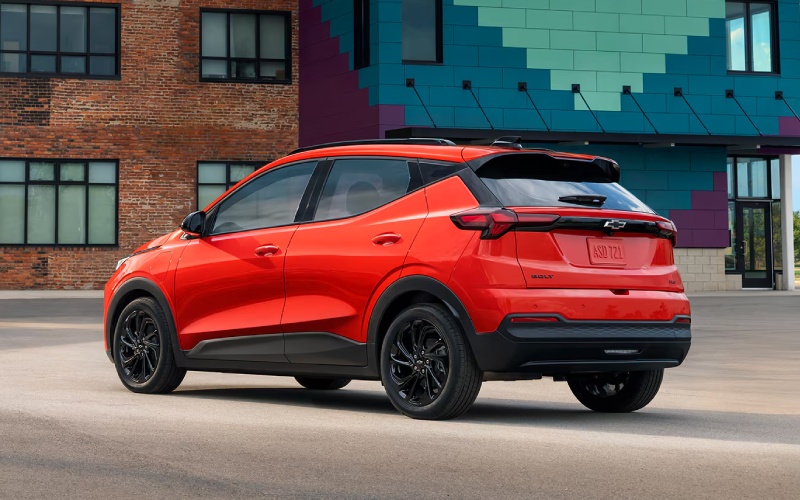
Alpine Chevrolet – Why the 2027 Chevrolet Bolt’s NACS Charging Makes Everyday Driving Easier around Aurora, CO
Charging access is the heart of electric ownership, and the 2027 Chevrolet Bolt makes it refreshingly straightforward with a standard NACS charge port. At Alpine Chevrolet, we’ve watched public charging expand quickly around the Denver metro, and the shift to NACS means the new Bolt taps into a wide network of DC fast chargers—so you can power up confidently on your schedule.
The Local Advantage of NACS Compatibility
Aurora’s driving mix—suburban streets, frequent hops onto I-225 or I-70, and occasional treks toward the foothills—calls for a compact EV that can charge fast when you need it. With its standard NACS port, the 2027 Bolt integrates smoothly with many of the chargers local drivers see every day, including popular networks with a growing number of stalls. That means fewer detours to find a compatible connector and more options when you arrive at a station with a mix of plug types.
The benefit extends beyond convenience. A broader charging choice can reduce wait times during busy hours, and when paired with the Bolt’s GM-estimated 10–80% DC fast-charge window in about 25 minutes, you can add meaningful range during a coffee break or quick errand. For many Aurora commutes and weekend plans, that’s a big confidence boost.
How NACS Works Day to Day
For most owners, the week runs on a simple rhythm—charge at home overnight and top off as needed. The 2027 Bolt’s standard NACS port helps streamline those occasional public stops. In practice, this looks like pulling into a familiar retail center on Havana Street or off Parker Road, finding an open DC fast charger, and plugging in without adapters. The standardization helps minimize guesswork and keeps your attention on the drive, not the hardware.
On the weekends, the Bolt’s estimated 262 miles of range means you might only need one fast-charging session for an out-and-back across the metro or a detour to a trailhead or ball field. Because NACS is widely supported, you can plan routes with more flexibility, filtering stations by speed and availability in your preferred apps—especially helpful if you’re juggling multiple stops.
Tech That Complements Charging Simplicity
The Bolt’s interior tech makes the charging experience easier to manage. The 11.3-inch touchscreen is large enough for crisp mapping, energy data, and charging locations, while the 11-inch Driver Information Center keeps key stats in your line of sight. When your phone is juicing up on the available wireless charging pad, it’s one less cable to handle when you step out to plug the car in. And if you’re the type who likes a tailored cabin at night, available multi-color ambient lighting adds a premium touch while you wait a few minutes to reach your target state of charge.
Google built-in brings native voice control for navigation, music, and more. If you prefer asking for a nearby DC fast charger by voice rather than tapping through menus, it’s easy to do. You’ll see station info populate quickly, and many apps now display stall counts and speeds, making it simpler to choose the right stop.
Hands-Free Confidence on Compatible Roads
Charging might be the headliner for EV ownership, but the drive matters just as much. The 2027 Bolt offers available Super Cruise®, bringing hands-free capability to compatible roads—an especially welcome feature for those regular Aurora-to-Denver runs or longer stretches along I-25. It lightens the load during stop-and-go or steady-state highway driving, while the Bolt’s quick, smooth acceleration handles merges and lane changes with ease.
Back in town, tight-parking confidence comes from available HD Surround Vision and Front and Rear Park Assist. These features complement the Bolt’s compact footprint and generous outward visibility, so you can slip into a tough parallel space or angle stall without stress.
What to Keep in Mind When You’re New to NACS
If you’re moving from a previous EV with a different connector, the transition is simpler than it looks. Public stations increasingly list plug types in apps and on hardware signage. When you reach a site, select a stall marked for NACS, confirm you’re at a DC fast unit if you need a quick charge, and plug in. It’s helpful to know your preferred charge window—for many drivers, targeting something like 20% to 80% balances time and battery efficiency for day-to-day use.
- Plan stops: Use apps that filter by plug type, power level, and stall count
- Check speeds: Favor higher-kW chargers for shorter sessions
- Mind SOC: Fast charge when you’ll benefit most—often between 10% and 60–80%
- Stay flexible: Pick stations near errands or a quick bite to optimize your time
For most Aurora routines, you’ll rely on home charging and use public DC fast stations to handle unplanned days or longer routes. The 2027 Bolt’s approach—practical range, standard NACS, and fast-charge capability—keeps that pattern easy to follow.
Frequently Asked Questions:
How often should I use DC fast charging with the 2027 Bolt?
Most owners will rely on home charging day to day and use DC fast charging as needed for longer drives or tight schedules. This pattern helps optimize time and keeps your routine simple.
Can I access popular fast-charging networks with the standard NACS port?
Yes. The 2027 Bolt’s NACS port enables access to many widely used public chargers across the Denver metro and beyond, including locations you’ll find around Aurora’s shopping centers and transit corridors.
What in-car tools help me manage charging on the go?
The 11.3-inch touchscreen, Google built-in, and available wireless phone charging make it easy to locate chargers, monitor energy use, and keep your phone ready for route planning or payment apps.
If you’re mapping out your first EV, the 2027 Chevrolet Bolt’s standard NACS port and strong fast-charging performance simplify the switch. We’re serving Arvada, Lone Tree, and Aurora with guidance on home setup, public charging tips, and test drives that reflect your daily routes. Whether you’re focused on reducing stops, exploring hands-free capability, or just learning the ropes, we can help you build a plan that fits your life.
Alpine Chevrolet is here to make your EV transition clear and comfortable—so you can enjoy the perks of electric driving from your first week of ownership.
Request more 2027 Chevrolet Bolt information
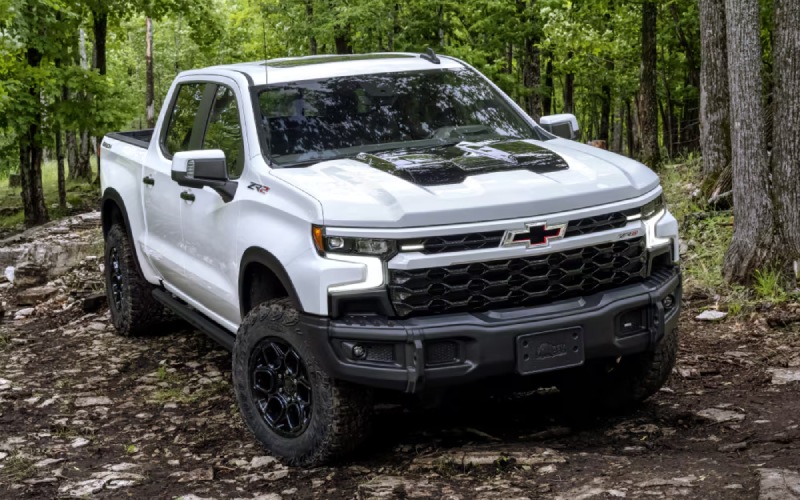
Alpine Chevrolet – Which truck has smarter trailering tech for Denver, CO drivers — the 2026 Chevrolet Silverado 1500 or the 2026 Ford F-150?
When drivers around Denver, CO search for a full-size pickup that makes towing feel easier day in and day out, the conversation quickly turns to integrated tools — camera views, in-vehicle checklists, blind-zone alerts that extend to the trailer, and hands-free assistance. The 2026 Chevrolet Silverado 1500 and the 2026 Ford F-150 both offer big capability, but the real question is which truck better supports the entire towing task: setup, highway miles, lane changes, and tight maneuvers at your destination. Here’s our take, grounded in how Colorado drivers actually use their trucks at elevation.
What matters most when you tow
Peak towing ratings only tell part of the story. Real-world towing confidence depends on visibility, workflow, and stability. The Silverado leans into those factors with up to 14 available camera views, an In-Vehicle Trailering App, Trailer Side Blind Zone Alert, and available Super Cruise® that uniquely supports hands-free driving on compatible roads while towing. Ford F-150 counters with helpful features like Pro Trailer Hitch Assist and a 360-degree camera, but the Chevy’s depth of views and integrated app support make setup and monitoring more seamless for beginners and seasoned haulers alike.
Camera views and visibility
When you’re threading a boat down a narrow launch or reversing a landscape trailer into an alley off Federal, seeing around and through the rig is everything. Silverado’s camera system brings multiple angles — hitch view, bed view, surround views, and more — to help you line up, check safety chains, and keep tabs on trailer corners when cutting shallow or sharp. F-150’s 360-degree system is helpful, but it doesn’t match the Silverado’s quantity of views, a difference you notice in complex parking areas and crowded trailheads.
In-vehicle trailering tools
Silverado builds a towing workflow right into the truck. Create a trailer profile in the In-Vehicle Trailering App, save settings, run a pre-departure checklist, and track maintenance. Pair that with Trailer Side Blind Zone Alert and the available Advanced Trailering Package, and you’ll find it easier to tow solo without missing a step. While Ford’s Pro Trailer Hitch Assist and available onboard scales are useful, the Silverado’s end-to-end, in-cabin workflow puts your tasks front and center on the large 13.4-inch touch-screen so you spend less time menu-diving and more time rolling.
Hands-free help on long hauls
Here’s a decisive difference: available Super Cruise® on select Silverado trims supports hands-free driving on compatible roads while towing — a capability Ford’s BlueCruise does not currently offer on F-150. If you frequent long stretches out toward the Eastern Plains or settle into the rhythm of I-25, that hands-free assist can help reduce fatigue, especially with a steady trailer in tow. It doesn’t replace driver attention, but it does ease the workload when the day gets long.
At elevation, torque delivery and transmission calibration also matter. Silverado’s available Duramax® 3.0L Turbo-Diesel brings 495 lb-ft of torque and relaxed, consistent pull that makes grades feel more manageable. The TurboMax™ engine’s best-in-class standard 430 lb-ft of torque is also a strong choice for everyday towing and hauling in mixed terrain.
Key trailering differences to consider
- Hands-free with towing: Silverado offers Super Cruise® with trailering on compatible roads; F-150’s BlueCruise does not currently support hands-free while towing.
- Camera coverage: Silverado offers up to 14 available camera views; F-150’s camera suite is helpful but covers fewer angles.
- Setup workflow: Silverado’s In-Vehicle Trailering App supports profiles, checklists, and monitoring; F-150 provides useful aids but a less unified in-cabin workflow.
- Trailer awareness: Silverado offers Trailer Side Blind Zone Alert to extend coverage to your trailer; comparable trailer-extended blind-spot alerts vary by configuration on F-150.
These are the types of features that flatten the learning curve and reduce stress — whether you tow a small camper a few times a year or haul equipment every week from job to job.
Frequently Asked Questions:
Does the Silverado’s hands-free system really work while towing?
Yes. Available Super Cruise® on select Silverado 1500 trims supports hands-free driver assistance on compatible roads and is designed to function while towing. It manages speed and steering within its operating domain. You must remain attentive and be ready to take control at any time.
How do the trucks compare for hitching and reversing alone?
Both trucks simplify hitching, but Silverado’s up to 14 available camera views and integrated Trailering App make a noticeable difference when you hitch solo and reverse in tight spaces. You can get dedicated views for the hitch, bed, and around the trailer, which reduces back-and-forth.
What about towing at altitude around Denver, CO and mountain grades?
Air density and grades can affect performance. Silverado’s available Duramax® diesel delivers robust low-end torque and relaxed throttle at elevation, and the 10-speed automatic manages grades smoothly. For steady-state climbs on I-70 or up to high-country reservoirs, this setup helps maintain speed with less effort.
Ultimately, the smarter trailering truck is the one that reduces mental load at every stage — from hitching and checklists to highway miles and parking. On that score, the 2026 Silverado 1500 stands out with its deeper camera coverage, integrated trailering workflows, trailer-aware safety features, and the unique advantage of hands-free assistance with a trailer attached.
If you’re mapping out weekend trips or planning steady work-week towing, schedule time to try the Silverado’s trailering views, checklists, and Super Cruise® route coverage. One loop around your usual routes will show how these systems simplify the entire process. Alpine Chevrolet is serving Commerce City, Denver, and Arvada with knowledgeable product specialists who can help you set up a trailer profile and walk through the tech step by step.
From small yard trailers and utility loads to campers and boats, the Silverado’s approach turns features into a smooth, repeatable routine. That’s how confidence builds — and why so many Denver-area drivers call the Silverado’s towing tech the difference-maker.
Finally, remember that no technology substitutes for safe driving habits. Keep up with trailer maintenance, balance loads carefully, and give yourself extra room to brake and maneuver in traffic. The right tech, used well, helps make every tow feel like it’s under control.
Request more 2026 Chevrolet Silverado 1500 information

Alpine Chevrolet – Which heavy-duty truck has smarter trailer cameras for Denver, CO drivers comparing Silverado 2500 HD and Super Duty F-250?
When you’re towing in the city, threading through tight trailhead parking, or merging onto the highway with a full load, the question that keeps coming up is simple: which heavy-duty pickup gives you the smarter camera tools to make trailering feel easier? For Denver, CO drivers weighing Chevrolet and Ford, the story centers on the Silverado 2500 HD’s deep camera suite and how it pairs with trailering tech you’ll actually use every day.
Chevrolet built the Silverado HD’s trailering ecosystem around visibility and workflow. With up to 14 available camera views, you get a 360-degree perspective, Hitch View for alignment, Bed View to check a fifth-wheel or gooseneck, and the standout Transparent Trailer View that can virtually let you “see through” a compatible trailer. That last feature changes your confidence in traffic and on narrow streets. It’s paired with an In-Vehicle Trailering App that organizes trailer profiles, maintenance reminders, and pre-departure checklists—all in the main display so you’re not hunting through submenus while a spotter waves you back.
What about the Ford Super Duty F-250’s trailer tech?
Ford’s Super Duty F-250 offers a robust toolkit as well, including available 360-degree cameras, Pro Trailer Hitch Assist, and Pro Trailer Backup Assist. Those systems can be helpful if you’re new to reversing a trailer or frequently swap between different trailers. The difference is that Chevrolet’s approach emphasizes continuous awareness and simplified setup through the app and those specialized views like Transparent Trailer View. When you’re towing on winding roads, in rush-hour traffic, or making sharp turns into alleys near job sites, being able to monitor what’s happening beside and behind your trailer in multiple perspectives can be the deciding factor between a smooth day and a stressful one.
Beyond startup and parking-lot maneuvers, the Silverado 2500 HD’s camera tech shines as speeds rise. Transparent Trailer View helps with lane changes, while Bed View confirms your fifth-wheel connection is riding just right over expansion joints or bridge seams. Combine this with Trailer Side Blind Zone Alert and you get a clearer sense of vehicles pacing you in adjacent lanes. Ford counters with strong driver-assistance features, but the Silverado’s layered visual context delivers a unique advantage, especially on crowded arterials and during quick merges.
How the screens and controls factor into daily towing
Interface matters when you’re managing a trailer. The Silverado’s available 13.4-inch diagonal touch-screen and 12.3-inch diagonal Driver Information Center make it simple to switch among camera views, check trailer profiles, and use maps without bouncing through multiple menus. Chevrolet with Google built-in further streamlines daily workflows—voice-set destinations, find diesel stations nearby, and mark service stops with natural voice commands. Ford’s SYNC 4 is capable, but Chevy’s layout tends to put towing tasks a click or two closer, which makes a big difference when you’re rolling.
The Silverado HD’s available trailering mirrors also play a pivotal role. Their power-extend function and camera integration complement the on-screen views, enhancing the picture you have of traffic beside long trailers and on curving on-ramps. It’s a complete visibility system, not a single feature.
Real-world Colorado use cases
If your week looks like early-morning equipment drops, mid-day freeway stints, and after-hours gear runs, the Silverado’s camera suite helps in specific ways. Backing a trailer into a tight yard or angled driveway? Hitch View and Transparent Trailer View limit guesswork and reduce the need for a second spotter. Navigating downtown job sites with cones and pedestrians? Surround views give you a margin of safety. Leaving for a weekend with a fifth-wheel camper? Bed View and the In-Vehicle Trailering App make pre-departure checks faster and more consistent—ideal when you’re packing, wrangling kids, and confirming torque specs in one go.
- Hitching alignment: Hitch View centers the receiver and ball so you can connect without repeated back-and-forth.
- Highway lane changes: Transparent Trailer View helps you verify space next to and behind long trailers.
- Fifth-wheel checks: Bed View quickly confirms pin height and bed clearance at a glance.
- Urban maneuvering: Surround views help you avoid curbs, pallets, and tight dock corners.
- Repeatable setup: The In-Vehicle Trailering App stores trailer profiles so settings are right every time.
Of course, technology only helps if the underlying hardware is up to the task. The Silverado 2500 HD backs its camera and software advantages with a strong chassis, a 10-speed automatic, and two muscular engines—headlined by the available Duramax® 6.6L Turbo-Diesel V8. That pairing makes it easier to maintain steady speed on rolling grades and to modulate throttle smoothly during precision maneuvers where abrupt inputs can complicate a perfect hitch alignment.
Frequently Asked Questions:
Does Transparent Trailer View work with any trailer shape or size?
Transparent Trailer View requires a compatible trailer setup and proper calibration. Most box-style trailers and many campers can qualify when configured per Chevrolet guidelines. Your advisor can help confirm compatibility and demonstrate the view in person.
How does the Silverado’s In-Vehicle Trailering App help day to day?
It centralizes trailer profiles, checklists, and maintenance logs in one place. That means you can switch between a landscape trailer and a fifth-wheel with settings saved, reducing the chance of a missed light check, brake gain mismatch, or tire-pressure oversight.
Is Ford’s Pro Trailer Backup Assist better for beginners?
It can shorten the learning curve for reversing, especially if you’re new to trailer dynamics. That said, many drivers find the Silverado’s combination of multiple camera views and intuitive screen prompts delivers a natural, confidence-building experience without relying on automated steering inputs.
Do I need the diesel to maximize camera benefits?
No. Camera views and trailering tech help regardless of engine choice. The diesel shines for sustained grades and heavy loads, but the gas V8 paired with the 10-speed still gets significant visibility and setup advantages.
If you’re prioritizing the smartest, easiest-to-use trailering camera technology, the Silverado 2500 HD makes a compelling case. Its integrated approach—anchor views like Hitch View and Bed View, plus the unique Transparent Trailer View and an organized trailering app—helps reduce the friction points that often make towing stressful. For drivers and crews serving Commerce City, Denver, and Arvada, that translates to faster setups, safer merges, and greater confidence across the Front Range. When you’re ready to test these features back-to-back, Alpine Chevrolet can walk you through each camera view and help you configure a trailer profile so you see how it all works before you even leave the lot.
Request more 2026 Chevrolet Silverado 2500 HD information
2026 Chevrolet Silverado 1500 RST for Denver, CO Drivers — Street Style, Smart Tech, Everyday Capability
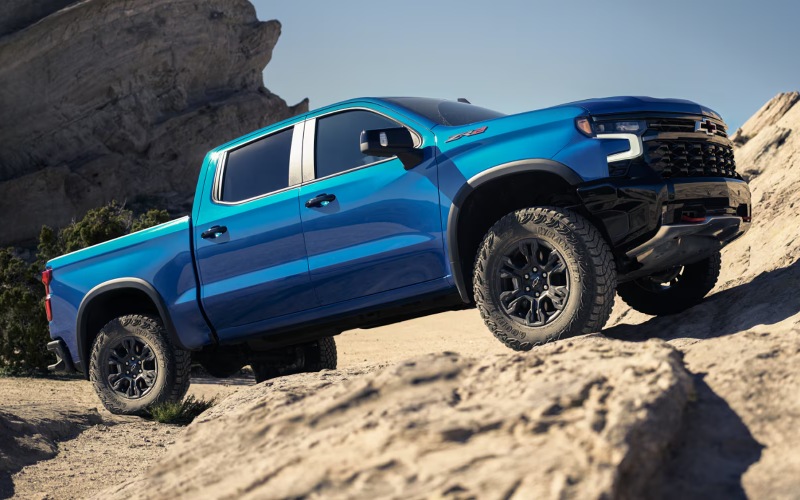
Alpine Chevrolet – 2026 Chevrolet Silverado 1500 RST for Denver, CO Drivers — Street Style, Smart Tech, Everyday Capability
The 2026 Chevrolet Silverado 1500 RST is a smart pick for Denver, CO drivers who want the confidence of a proven full-size truck and the clean, street-forward look that fits city life. It’s the trim that threads the needle between style and substance—body-color grille bar, bumpers, and door handles on the outside, matched to a crisp 13.4-inch diagonal touch-screen and 12.3-inch diagonal Driver Information Center inside. In short, RST looks dialed without sacrificing an inch of Silverado utility.
Let’s talk power. RST offers four available engines, so you can build around your real needs. The TurboMax™ engine brings a best-in-class 430 lb.-ft. of standard torque for responsive acceleration in stop-and-go traffic and confident towing. If you want more displacement, the available 5.3L EcoTec3 V8 is the classic, balanced choice for commuters who also tow on weekends. Go big with the 6.2L EcoTec3 V8 if you want authoritative power on I-70 climbs or choose the available Duramax® 3.0L Turbo-Diesel for quiet, torque-rich performance and relaxed long-distance hauling. Pair any engine with the Silverado’s advanced trailering tech—up to eight cameras and as many as 14 available views—so hitching, merging, or backing into tight Lower Downtown spaces is as straightforward as it can be.
Why RST fits Denver driving
Denver demands flexibility—urban streets, construction zones, ballgames, plus a quick run to mountain trailheads. RST’s standard street-smart look and available 20-inch high-gloss Black wheels create a cohesive profile that slides into a downtown garage just as confidently as it rolls up to a job site. Wireless Apple CarPlay® and Android Auto™, an available WiFi® hotspot, and available Google built-in keep your day in sync—maps, calls, playlists, and calendar all feel effortless. And because Chevrolet builds Silverado for real work, Durabed delivers best-in-class standard cargo bed volume with 12 standard tie-downs. Toss mountain bikes aboard, secure tools for a remodel, or load the bed with landscaping materials without juggling straps or hardware.
Safety and awareness also matter at altitude. Chevy Safety Assist comes standard, and RST elevates your options further with available Trailer Side Blind Zone Alert, HD Surround Vision, and a full suite of camera views. If you haul campers or boats up to the high country, the In-Vehicle Trailering App supports custom trailer profiles, pre-departure checklists, and diagnostics, so you roll out with confidence every time.
Powertrains explained in real terms
- TurboMax torque: Best-in-class 430 lb.-ft. of standard torque means responsive launches, confident passing on I-25, and stout towing without constant downshifts.
- 5.3L EcoTec3 V8: Balanced everyday muscle with a 10-speed automatic—great for mixed city and highway miles with regular towing duties.
- 6.2L EcoTec3 V8: Maximum gasoline power for drivers who want strong acceleration, confident merging, and high-capacity towing for weekend toys.
- Duramax 3.0L Turbo-Diesel: Quiet, torque-rich tow partner ideal for long hauls to trailheads or lakes with relaxed revs and smooth grade control feel.
Whichever route you choose, RST’s chassis tuning and steering feel are buttoned-down. The truck tracks well at speed on E-470 and feels composed over neighborhood speed humps and expansion joints.
Trailering tech that builds confidence
Denver-area owners often tow—utility trailers, campers, drift cars, or boats to Cherry Creek Reservoir. RST’s available camera system with up to 14 views changes the game: Transparent Trailer View for better awareness, Hitch Guidance for easy alignment, and perimeter views that make tight maneuvers less stressful. Trailer Side Blind Zone Alert extends blind-zone coverage to the length of your trailer, and the In-Vehicle Trailering App helps new and seasoned owners stay organized with maintenance reminders and checklists. It’s towing the way it should be—predictable and calm.
Bed and cargo done right
Durabed is built for real loads. You get roll-formed high-strength steel, 12 standard tie-downs rated for serious use, and available accessories that transform the bed into a modular workspace. The available Multi-Flex Tailgate offers six configurations, including a full-width step for easier bed access and an inner gate work surface that’s perfect for a laptop or quick project planning. For Denver homeowners and small businesses, this flexibility makes your truck both a tool and an office.
Interior tech and comfort
The RST cabin centers around a large, responsive 13.4-inch touch-screen—easy to read in sunlight and intuitive on the move. The 12.3-inch Driver Information Center is reconfigurable, so your gauges, navigation prompts, or trailering info show up the way you like. With available Google built-in, Google Assistant handles voice commands, Google Maps helps route around traffic or closures, and available connected services through OnStar® support peace of mind. It’s a polished, modern interface that feels consistent with top-tier consumer tech.
Who should pick RST?
- Daily drivers: Want a clean, cohesive look with strong standard torque and an upscale tech cockpit without moving into luxury pricing.
- Weekend haulers: Need camera-driven trailering tools for stress-free boat, camper, or car hauler moves.
- Small business owners: Value Durabed’s volume, Multi-Flex Tailgate versatility, and a cabin that doubles as a mobile office.
For buyers deciding between trims, RST’s balanced approach—style, capability, and engine flexibility—often proves the sweet spot. It feels premium without trying too hard and works hard without feeling bare-bones.
Frequently Asked Questions:
Can the RST handle mountain grades with a trailer?
Yes. With the right engine choice and available trailering tech, RST offers confident grade performance, robust torque, and camera views that help you monitor everything as you climb and descend.
Is RST comfortable for daily commuting and longer trips?
Absolutely. The modern, quiet cabin, wireless smartphone integration, available Google built-in, and intuitive screens make I-25 commutes and weekend road trips easy.
Which RST engine is best for mixed city and towing?
The 5.3L EcoTec3 V8 is a great all-rounder. If you need maximum thrust, the 6.2L EcoTec3 V8 shines. For quiet, torque-rich towing, the Duramax® 3.0L Turbo-Diesel is compelling.
What bed features are most useful in the city?
The Durabed’s 12 tie-downs and available Multi-Flex Tailgate are everyday heroes—easy access for loading, secure anchoring for awkward cargo, and a work surface for quick tasks.
Where can I see and test an RST locally?
Visit Alpine Chevrolet—serving Commerce City, Denver, and Arvada—to compare engines and tech, and to set up a route that matches your driving and towing needs.
Bottom line: the 2026 Chevrolet Silverado 1500 RST is purposefully built for Denver life—confident power on the highway, precise camera tech for trailering, a flexible bed for real cargo, and an interior that brings your digital world along without drama. It’s the sensible, strong, and stylish choice for drivers who ask their truck to wear many hats—Monday through Friday and well beyond.
*Image may not be actual model
Request more 2026 Chevrolet Silverado 1500 information
How do I schedule Chevrolet Certified Service online at Alpine Chevrolet near Denver, CO?
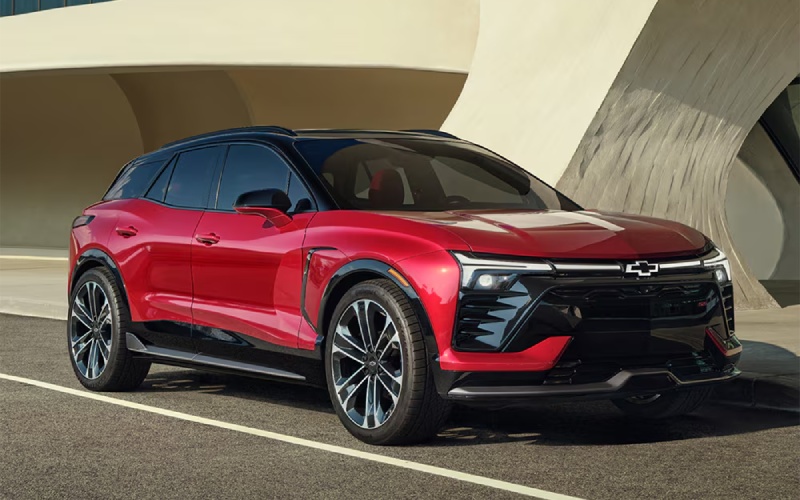
Alpine Chevrolet – How do I schedule Chevrolet Certified Service online at Alpine Chevrolet near Denver, CO?
Getting routine maintenance on the calendar should be simple, especially when driving in and around Denver’s busy corridors and mountain gateways. At Alpine Chevrolet in Aurora, scheduling Chevrolet Certified Service online is designed to be straightforward, quick, and clear from start to finish. With our GM-trained technicians, GM Genuine Parts and ACDelco Parts, and a people-first approach built around respect, you can book the service your Chevrolet needs and get back to life on the Front Range with confidence.
In this guide, you will find exactly how to schedule service online, what to have handy before you book, what our Multi-Point Vehicle Inspection includes, and how local driving conditions near Denver, CO influence recommended maintenance. You will also find concise answers to common follow-up questions so you can plan your visit without guesswork.
Why book Chevrolet Certified Service with Alpine Chevrolet
Every visit to our Service Department is handled by Chevrolet Certified Service experts who know your vehicle down to the last fastener. That training matters. From the wipers to the wheels, we service your Chevrolet to factory standards and use GM Genuine Parts and ACDelco Parts that fit and perform as intended. That attention to detail supports long-term reliability whether your week includes I-225 commutes, E-470 loops, or weekend time on high-altitude roads.
As a locally owned dealership in Aurora, our team reflects the communities we serve across Denver and the Front Range. Our process is relationship-driven—clear communication, transparent recommendations, and work that aligns with what your vehicle actually needs. When you schedule online, you connect directly to that experience in a few quick steps.
Step-by-step: How to schedule Chevrolet Certified Service online
You can reserve your service appointment online in minutes. Here is what the process typically looks like from start to finish.
- Go to the Alpine Chevrolet website and select Schedule Service
- Enter your vehicle details to help our team prepare
- Choose the services your Chevrolet needs from the menu
- Select available dates and times that fit your schedule
- Share your contact preferences for appointment updates
- Review your selections and confirm your appointment
Once you submit your request, our Service team reviews the details to ensure the right time and technician are matched to your vehicle’s needs. If anything requires a quick clarification—such as a special concern or an added service—we will reach out so everything is squared away before you arrive at 14500 E Colfax Ave, Aurora, CO 80011.
What to have ready before you book
Preparing a few details ahead of time makes scheduling even smoother and helps our Certified Service technicians deliver efficient, accurate care on the first visit.
- Vehicle information such as model year, trim, and current mileage
- VIN if available for precise parts matching and service history
- Any dashboard warning light descriptions, including when they appear
- Notes on symptoms like noises, vibration, or fluid spots
- Your preferred contact method for confirmation and updates
Sharing clear notes about what you are noticing—like a brake squeal after long descents or a battery that hesitates on cold morning starts—helps our team pinpoint the right inspection steps the moment your vehicle rolls into the bay.
Driving near Denver calls for maintenance that respects our unique geography. High altitude, frequent elevation changes, and steady traffic cycles place specific demands on brakes, cooling systems, and transmissions. A well-timed visit can keep those systems operating as designed, from everyday Colfax Avenue commutes to weekend drives up U.S. 285.
What our Multi-Point Vehicle Inspection covers
Every service visit is an opportunity to check the essentials. Our Chevrolet Certified Service technicians complete a Multi-Point Vehicle Inspection that looks at the components that most affect safety, performance, and long-term value.
- Tires for tread depth, wear patterns, and proper inflation
- Brake pads and rotors for thickness and condition
- Battery state of health and charging performance
- Wiper blades and washer operation for visibility
- Engine oil level and condition
- Coolant, brake, and transmission fluid levels
- Belts and hoses for cracks, leaks, or wear
These checks inform honest recommendations—what is fine, what is coming up, and what should be addressed now. Our goal is to help you plan maintenance on your terms with information you can trust.
Local factors often influence the timing of these services. Repeated mountain braking can accelerate pad wear, while temperature swings and altitude can affect battery performance. Our technicians account for those realities when discussing service intervals and future visits.
How Denver-area driving shapes smart maintenance
The Denver metro and Front Range offer a wide range of conditions in a single day—urban stop-and-go, highway cruising, and steep grades that challenge cooling and braking systems. For many drivers, that mix suggests a few smart habits.
- Oil and filter changes at intervals aligned with Chevrolet guidance and your driving mix
- Brake inspections after repeated long descents or frequent foothills trips
- Battery tests before the coldest months and after the hottest weeks
- Tire rotations to even out wear from city corners and highway miles
- Cabin air filter checks for air quality during high-dust or high-pollen periods
Following Chevrolet’s maintenance schedule remains the starting point. Layering in local use—like regular drives to Red Rocks or commuting on I-70—helps fine-tune the plan so your Chevrolet stays ready for what each week brings.
Frequently Asked Questions:
Can I schedule multiple services in one online appointment?
Yes. When you select services during online scheduling, you can add routine maintenance and concerns you would like diagnosed at the same visit. If your list is extensive, our team may contact you to ensure enough time is reserved.
What if I prefer to book by phone?
You can always call our Service team at 800-706-2814 for personal assistance. We will help you select services, choose a time, and note any concerns so your visit is set up correctly.
Do you use GM Genuine Parts and ACDelco Parts?
Yes. Our Chevrolet Certified Service team uses GM Genuine Parts and ACDelco Parts to help maintain factory-level fit, function, and durability.
How close is Alpine Chevrolet to Denver, CO?
Our dealership is at 14500 E Colfax Ave, Aurora, CO 80011—convenient to Denver via Colfax Avenue, I-70, and I-225. Many customers from Denver, Highlands Ranch, Lakewood, Commerce City, and across the Front Range visit us for Certified Service.
What happens if my schedule changes after I book?
If you need to adjust your appointment, contact us as soon as possible through the confirmation link or by calling 800-706-2814. We will help you select a new time that works for you.
Can I add a Multi-Point Vehicle Inspection to my visit?
Our Multi-Point Vehicle Inspection is part of how we help keep your Chevrolet in top shape. Ask our team when you book online or by phone so we can include it during your visit.
Do you service all Chevrolet models?
Our Certified Service experts support Chevrolet cars, trucks, and SUVs. Share your specific model and concerns when scheduling so we can prepare the right parts, tools, and time.
Whether you bring in a family SUV for routine maintenance or a hard-working truck after a stretch of Rocky Mountain miles, our process is built to respect your time and your vehicle. We take the same people-first approach that guides everything we do at Alpine Chevrolet—clear expectations, careful work, and updates you can count on.
If you are ready to book, select Schedule Service on our website or call 800-706-2814. Our team will help you lock in a time, answer any final questions, and confirm the services your Chevrolet needs. From Aurora to Denver and across the Front Range, we are here to keep your vehicle running at its best—today and thousands of miles from now.
Visit Alpine Chevrolet at 14500 E Colfax Ave, Aurora, CO 80011, and experience a straightforward service appointment grounded in training, transparency, and respect. When maintenance is easy to schedule and completed to Chevrolet standards, every mile near Denver, CO feels that much more confident.
Request more 2026 Chevrolet Blazer EV information
What to Know About the 2027 Chevrolet Bolt
Alpine Chevrolet – What to Know About the 2027 Chevrolet Bolt
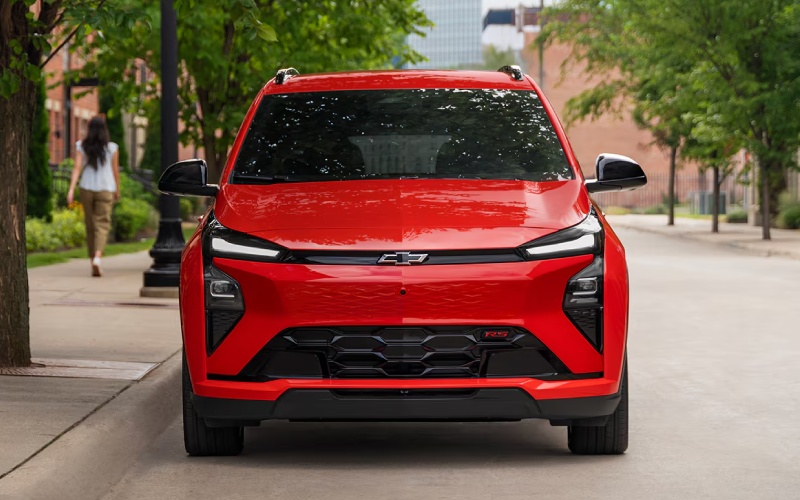
The 2027 Chevrolet Bolt arrives with a clear mission—make electric driving easier, more enjoyable, and more accessible for more drivers. It blends meaningful range, faster charging, a refined interior, and modern safety and driver assistance into a compact footprint that fits daily life. For commuters, first-time EV shoppers, and city drivers who also love a weekend road trip, this Bolt brings a thoughtful balance of value and capability.
As Alpine Chevrolet, serving Commerce City, Denver, and Arvada, we are excited to share what sets the latest Bolt apart and how it can slot seamlessly into your routine. Below, you will find a structured, easy-to-scan overview designed to answer the common questions we hear—from range and charging to trims, tech, and how to prepare for ownership.
Key highlights at a glance
- EPA-estimated range: Up to 262 miles on a full charge for confident daily driving and weekend getaways
- Fast charging: GM-estimated 10% to 80% in about 25 minutes with DC public fast charging
- Charge port: Standard NACS port, opening access to a wide array of public networks, including Tesla Superchargers
- Displays: 11.3-inch center touchscreen and 11-inch Driver Information Center for crisp, intuitive control
- Safety suite: Over 20 standard safety and driver assistance features for everyday peace of mind
- Hands-free tech: Available Super Cruise driver assistance technology for compatible roads
- Trim choice: LT plus the first-ever RS with sport-inspired design details
What does this mean in real life? Commuting, errands, and regional travel become simpler—charge at home overnight or top up on the go—while enjoying a cabin that feels modern without a steep learning curve. The Bolt’s compact size makes it easy to park, yet it still offers useful cargo flexibility and a surprisingly airy feel inside.
Range and charging confidence
The Bolt’s EPA-estimated 262 miles of range gives you genuine freedom to plan your day without tethering every trip to a charger. When it is time to add miles quickly, DC fast charging delivers more than 2.5x faster speeds than the previous Bolt EUV, so road trips and spontaneous plans stay on schedule. The standard NACS port helps unlock seamless access to many public fast-charging locations, including Tesla Superchargers, which continues to expand across the U.S. and Canada.
Charging is made even more convenient by the Bolt’s new battery technology. It is designed for routine 100% charges, which helps you maximize both convenience and overall charge speeds. In addition, the battery is backed by an 8-year/100,000-mile limited warranty, adding confidence for long-term ownership.
- Home Level 2 setup: Install or verify a 240-volt outlet for faster at-home charging and predictable daily start-of-day range
- Public DC fast strategy: Use fast charging for mid-trip top-ups or when your schedule calls for the quickest turnaround
- Daily top-offs: Take advantage of workplace or destination Level 2 charging to reduce reliance on fast charging
- Battery optimization: The Bolt’s pack is engineered to support 100% routine charges—ideal for predictable range every morning
- Route planning: Use EV-aware navigation to map stops at high-speed chargers along your route
- Cost tracking: Monitor energy use and charging history in-vehicle and in connected apps to optimize efficiency
Whether you primarily charge at home or split time between home, work, and public stations, this setup keeps things simple. Many drivers find that Level 2 home charging paired with occasional fast charging covers nearly every scenario.
Design, space, and everyday practicality
The 2027 Bolt wears a clean, expressive design with new front and rear fascia and available 17-inch aluminum wheels. Fresh paint choices—including Habanero Orange, Relic Green Metallic (LT only), Atomic Yellow (RS only), and Marina Blue Metallic—lend personality without sacrificing the Bolt’s tidy, easy-to-park proportions.
Inside, the cabin is redesigned for clarity and comfort. The central touchscreen sits within natural reach, physical climate controls remain straightforward to use, and the Driver Information Center places key data front and center. A reworked center console adds usable storage and larger cup holders that accommodate today’s oversized tumblers. Underfloor cargo storage—up to 4 cubic feet—helps keep items secure and out of sight.
Materials also impress for the class. Available Evotex leather-alternative seating is soft to the touch and easy to care for, and multi-color ambient lighting on RS elevates evening drives with a subtle glow.
Tech that feels familiar
Technology should help without getting in the way. The Bolt’s 11.3-inch touchscreen brings together media, navigation, and settings with snappy responses and an intuitive layout. With Google built-in, you can simply say, “Hey Google,” to get directions, place a call, find a charger, or manage your day—hands-free. Available wireless phone charging keeps your smartphone topped up without the cord clutter.
Available HD Surround Vision offers a bird’s-eye view when maneuvering in tight spaces, which pairs nicely with the Bolt’s compact footprint. Together, these features create a stress-reducing environment whether you are parallel parking downtown or backing into the charging spot at your favorite coffee shop.
Safety and driver assistance
Safety is foundational here. Every Bolt includes over 20 standard safety and driver assistance features. Available Adaptive Cruise Control maintains a driver-selected following gap in traffic. Front and Rear Park Assist can alert you to nearby detected objects while moving slowly in parking scenarios. And IntelliBeam can automatically toggle your high beams based on surrounding traffic conditions to help you see and be seen.
Available Super Cruise takes things a step further with hands-free driver assistance on compatible roads. It is designed to lend confidence and reduce fatigue on longer stretches, especially when paired with the Bolt’s quiet, smooth electric drive. As always, these technologies are designed to assist, not replace, attentive driving—keep your eyes on the road and hands ready to take control.
Meet the first-ever Bolt RS
If you like a sportier look, the RS trim brings unique design elements that pop from every angle. A distinct grille and RS badging set the tone up front, while Gloss Black roof rails and 17-inch Black wheels sharpen the profile. Inside, black Evotex seating with red stitching and multi-color ambient lighting add subtle drama without overwhelming the cabin’s clean layout.
Under the skin, you still get the same practical blend of range, charging speed, and user-friendly tech that defines the Bolt lineup—just with a little extra attitude.
Shopping smart: how to get ready for your Bolt
- Trade-in valuation: Get a real-world estimate of your current vehicle’s worth to streamline your budget planning
- Charger readiness: Consult a licensed electrician about adding a 240-volt outlet or Level 2 EVSE where you park
- Trim and options: Compare LT and RS, then choose interior materials, colors, and driver assistance upgrades that match your routine
- Test-drive plan: Replicate your real life—mix city streets, highway, and a parking maneuver to sample visibility and ride comfort
- Financing and incentives: Review potential federal and state EV incentives and explore financing or lease programs that fit your goals
- Delivery and setup: At delivery, pair your phone, confirm charging accessories, walk through EV-specific settings, and set up connected services
When you are ready, our team can help you compare configurations and talk through charging at home, on the go, and at popular high-speed networks. We can also walk through ownership tips that make the first week feel second nature.
Frequently Asked Questions:
What is the EPA-estimated range of the 2027 Chevrolet Bolt?
The EPA-estimated range is up to 262 miles, which covers most daily driving needs with room to spare. Your actual range will vary based on driving style, temperature, terrain, and accessory use.
Does the 2027 Bolt use the NACS plug and can it access Tesla Superchargers?
Yes. The Bolt includes a standard NACS charge port, opening access to many public chargers, including Tesla Superchargers, as those networks support NACS for compatible vehicles.
How fast can the Bolt charge on a DC fast charger?
GM estimates a 10% to 80% charge in about 25 minutes at a compatible DC fast charging station. Charging speeds vary based on conditions like station power, battery temperature, and state of charge.
What trims are available and what is special about the RS?
The lineup includes LT and the first-ever RS. RS adds sporty design cues such as a unique grille, Black wheels, Gloss Black roof rails, and interior details like Evotex seating with red stitching and ambient lighting.
Which safety and driver assistance features stand out?
Over 20 safety and driver assistance features come standard. Available highlights include Adaptive Cruise Control, Front and Rear Park Assist, IntelliBeam, HD Surround Vision, and Super Cruise hands-free driver assistance on compatible roads.
From range and charging to tech, safety, and style, the 2027 Chevrolet Bolt is engineered to remove friction from everyday driving. If you are moving to your first EV or upgrading to the latest features, you will find a confident, easygoing companion that feels right at home in busy city streets and beyond.
Ready for a closer look? Reach out to schedule a test drive, explore charging options for your home setup, and compare LT vs. RS to find your perfect fit. Our team is here to help you go electric with clarity and confidence.
Request more 2027 Chevrolet Bolt information
Smart Tech That Feels Natural — 2026 Chevrolet Equinox Connectivity for Lone Tree, CO Drivers

Alpine Chevrolet – Smart Tech That Feels Natural — 2026 Chevrolet Equinox Connectivity for Lone Tree, CO Drivers
Tech is most useful when it fades into the background—working quickly, clearly, and exactly when you need it. For drivers around Lone Tree, CO commuting along Lincoln Avenue, navigating Park Meadows traffic, or connecting calls on a quick run to the Highlands Ranch area, the 2026 Chevrolet Equinox delivers precisely that kind of seamless experience. The key is a thoughtful blend of a large 11.3-inch diagonal infotainment touch-screen, Google built-in, and wireless Apple CarPlay® and Android Auto™ compatibility. From the driver’s seat, it all feels refreshingly easy, so you can focus on the drive rather than the menus.
Let’s break down what that looks like in daily life. The screen is big enough to glance-and-go without hunting through small icons. Voice control with Google Assistant lets you set a destination, send a message, or start a playlist without lifting your hands from the wheel. And with wireless connectivity, you can leave cables at home. The pass-through center console keeps essentials organized and out of the way, whether you’re making a quick coffee stop on Yosemite Street or picking up kids near Bluffs Regional Park.
Why the 11.3-inch diagonal screen matters
A larger display is more than a style point—it changes how easily you can absorb information on the move. In the 2026 Equinox, map detail is crisp, icons are easy to find, and commonly used functions sit exactly where you expect. That means faster selections, fewer distractions, and quicker recovery if traffic conditions change and you need to re-route. For Lone Tree drivers who juggle errands between Park Meadows, Sky Ridge Medical Center, and neighborhood schools, that fluidity makes a difference every day.
Another advantage is how well the Equinox pairs new tech with familiar interactions. If you prefer smartphone mirroring, wireless Apple CarPlay® and Android Auto™ are right there. If you’d rather live inside the vehicle’s native system, Google built-in gives you maps, voice, and app access in a polished, reliable package. Either way, you’ll spend less time digging through sub-menus and more time keeping your eyes forward.
Everyday organization that actually helps
Connectivity is only part of the story. The Equinox leans into everyday usability with the pass-through center console and flexible cargo solutions that make short hops and longer drives equally easy. Tuck your phone, sunglasses, and charging case where you can grab them quickly at a red light. Then, shift focus to the rear—fold the 60/40 split-bench to expand cargo space, and use the hidden underfloor storage for small items you’d rather keep out of sight during a lunch stop or gym visit.
This is the kind of thoughtful packaging that shines in real life. Lone Tree’s weekday rhythms blend work, workouts, school pickups, and evening plans, and the Equinox keeps pace by staying quietly helpful—never fussy, never in the way.
Safety technology that supports the flow
Even the best tech should complement, not complicate, your awareness on crowded streets. With over 15 standard safety and driver assistance features, Equinox provides gentle backup in key scenarios, from merging onto C-470 to threading through the Park Meadows retail corridor. Chevy Safety Assist includes Automatic Emergency Braking, Lane Keep Assist with Lane Departure Warning, and IntelliBeam®, among others, and available HD Surround Vision adds a 360-degree view that’s especially handy in tight parking lots.
Rear Cross Traffic Braking and Side Bicyclist Alert take some of the stress out of backing out of angled spaces or scanning for fast-moving cyclists near mixed-use paths. None of this replaces attentive driving, of course, but it helps you stay in control when the environment gets busy.
Drive modes and available AWD—quiet confidence
Tech isn’t limited to screens. The standard Drive Mode Selector lets you tailor how the Equinox responds, while available all-wheel drive adds traction when conditions call for it. That’s useful on variable routes with quick elevation changes or after a rain shower passes through the area. The result is a calm, planted feel that helps you maintain momentum on your way from Lone Tree to meetings in the Denver Tech Center and back again.
What stands out is how naturally the Equinox brings it all together. There’s no steep learning curve. Features are there when you want them and invisible when you don’t. For many drivers, that’s the best version of modern mobility—technology that quietly empowers the drive without overwhelming it.
Quick tips to get the most from Equinox tech
- Profile Setup: Create a driver profile so your preferred apps and settings launch automatically.
- Voice Shortcuts: Save common destinations to speed up navigation with simple commands.
- Wireless Essentials: Keep a compact backup cable in the console for guests using wired mirroring.
- Parking Aids: Turn on available HD Surround Vision when navigating tight ramps and garages.
- Routine Check: Periodically review safety setting preferences to match your current commute.
For families shuttling to practices near Lone Tree’s parks, couples exploring dinner spots across the south metro, or solo commuters juggling calls and calendars, the 2026 Chevrolet Equinox meets your tech expectations and then quietly moves out of the way. That balance is what makes it so easy to recommend.
Frequently Asked Questions:
Does the 2026 Equinox support wireless smartphone mirroring?
Yes. Wireless Apple CarPlay® and Android Auto™ compatibility are supported, so you can mirror core apps without plugging in.
Is Google built-in standard or do I need to add it?
Google built-in is available and integrates smoothly with the 11.3-inch diagonal infotainment touch-screen for navigation, voice control, and select apps.
What size is the main infotainment screen?
Every 2026 Equinox features a large 11.3-inch diagonal infotainment touch-screen—big, bright, and easy to read at a glance.
Can I charge my phone wirelessly?
Available wireless phone charging lets you set your compatible device on the pad and keep it powered up during your drive.
Which trims emphasize sport or adventure style?
RS leans into a spirited, sporty look with Black emblems and unique styling touches, while ACTIV adds rugged cues, all-terrain tires, and a uniquely tuned suspension.
If you’re ready to take the next step, our team would be glad to help you pair the right tech and trim to your daily routes. From setup tips to test drives that mirror your real-world commute, we make it simple to feel at home in your Equinox from day one—Alpine Chevrolet, serving Arvada, Lone Tree, and Aurora.
Request more 2026 Chevrolet Equinox information

Alpine Chevrolet – Does the 2026 Chevrolet Colorado need premium gas in Arvada, CO?
The 2026 Chevrolet Colorado is powered by the 2.7L TurboMax® engine, and for many drivers around Arvada the most practical ownership question is simple: what fuel should you put in it? Between high-altitude driving, frequent trips up CO-93 or I-70, and the common sight of 85-octane at Colorado pumps, choosing the right gasoline feels more involved than a quick stop on Wadsworth. Here is a clear, real-world answer for life near Arvada—plus when, why, and how premium might make sense for your routine.
Quick guidance for Arvada drivers
The 2026 Colorado’s 2.7L TurboMax engine is engineered to run on regular unleaded gasoline with an 87-octane rating or higher. Around Arvada and across the Front Range, we recommend sticking with 87-octane Top Tier fuel for everyday driving. You will see 85-octane at many Colorado stations due to altitude, but modern turbocharged engines like TurboMax are better served by 87 for optimal performance and consistency. Premium is optional—not required—and can be a smart choice when towing heavy, climbing long grades, or driving in high heat.
Why octane matters in a turbocharged Colorado
Octane is about knock resistance, not “power in a bottle.” Your Colorado’s turbocharged design increases air density to make strong torque—430 lb.-ft. of it—while advanced engine controls and knock sensors adjust timing and boost to protect the engine if fuel quality is marginal. With 87-octane, the Colorado delivers the capability Chevy engineered, including up to 7,700 lbs. of max available towing when properly equipped. Step up to premium and the engine control system can reduce knock correction under sustained load, which may help it feel steadier on long climbs—without changing the truck’s published ratings.
At altitude, thinner air lowers cylinder pressure and reduces the octane requirement for some naturally aspirated engines. That is why 85-octane is sold here. However, turbo engines compress intake air to restore density, which can put you closer to sea-level cylinder pressures under load. For this reason, 87-octane remains the safer baseline for the TurboMax in everyday Colorado use.
When premium gas is worth considering
Regular 87 is the right everyday answer. Still, certain Arvada-area drives create extended high-load conditions where premium can help the engine maintain more consistent response. Consider filling with premium for trips like hauling camping gear to Golden Gate Canyon, towing a side-by-side to Rollins Pass, or pulling a boat up Floyd Hill.
- Heavy towing near max load: If you are approaching your trailer and cargo limits for long stretches, premium can reduce knock correction and maintain steadier power delivery.
- Long, continuous climbs: Extended grades on I-70 toward Loveland Pass or the tunnels are prime scenarios for premium to offer smoother, more consistent performance.
- High heat plus altitude: Hot summer afternoons on C-470 or US-6 into Clear Creek Canyon add thermal load—premium can provide a margin against knock.
- Remote fueling peace of mind: If pump quality is uncertain at a small mountain station, premium adds headroom for the engine’s control strategy.
Think of premium as a situational tool. It is not required, but it can make demanding drives feel more effortless. For day-to-day laps through Olde Town or the commute down Sheridan to I-76, 87-octane Top Tier remains our recommendation.
Fueling best practices around Arvada
Small choices at the pump help your Colorado feel great for years. We see the difference in vehicles we service—cleaner combustion and steadier performance show up as fewer drivability complaints and more consistent mileage.
- Choose Top Tier fuel: Detergent additives help keep injectors and intake valves clean. Most major brands along Wadsworth and Kipling participate in the Top Tier program.
- Stick with 87 or higher: Avoid 85-octane in the TurboMax, even at altitude. The small savings are not worth potential performance tradeoffs.
- Mind ethanol content: Standard E10 (up to 10 percent ethanol) is common and acceptable—always confirm specifics in your Owner’s Manual and on the fuel door label.
- Do not use E85 unless labeled FlexFuel: The 2.7L TurboMax Colorado is not a FlexFuel model, so skip E85.
- Keep the cap sealed: A loose cap can trigger a check engine light and impact evaporative emissions.
If you have questions about a specific station or blend you use near Arvada Ridge or along Ralston Road, our service advisors are happy to share local insights.
Towing into the foothills—fuel and driving tips that work together
Fuel choice and driving technique go hand-in-hand when you are pulling weight toward Golden or beyond. The Colorado’s available Tow/Haul mode optimizes shift schedules and throttle response for grades, and the enhanced 8-speed automatic is tuned to keep the TurboMax in its sweet spot. Consider these habits when your day involves more altitude than stoplights:
- Activate Tow/Haul: It helps the transmission hold gears, reduces hunting, and complements the engine’s torque curve.
- Manage heat: On hot days or sustained climbs, premium fuel can help the engine maintain timing while you keep an eye on gauges.
- Plan your stops: Top off with 87 or premium at a known Top Tier station in Arvada before you head for I-70 to avoid fueling with unknown blends at high elevation.
- Know your numbers: Match your trailer to the Colorado’s equipment, hitch ratings, and payload limits. Your choice of fuel does not change published capacities.
Set up well, the Colorado’s composure stands out—especially with available camera views, an available Trailering App, and drive modes that include available Tow/Haul for confident control.
Same fuel guidance, any trim you choose
Whether you lean toward an LT for its everyday value, a Trail Boss for the factory lift, a Z71 for balanced off-road capability, or the ZR2 with Multimatic® DSSV dampers, the fuel guidance above applies across the 2026 Colorado lineup. Every model brings the standard 2.7L TurboMax with its strong torque and refined tuning, plus connected tech like the standard 11.3-inch diagonal center touch-screen with Google built-in, Apple CarPlay® and Android Auto™ compatibility, and thoughtful safety features such as Chevy Safety Assist and IntelliBeam® Auto High Beams. Your trim choice should reflect how and where you drive—fueling remains straightforward either way.
If you want to feel the difference for yourself, visit our Aurora showroom—just a quick hop from Arvada via I-70 and I-225. We can set up back-to-back drives, review your trailering plans, and help you decide whether premium makes sense for your typical routes.
Frequently Asked Questions:
Can I use 85-octane gas in my 2026 Colorado around Arvada?
We recommend 87-octane or higher for the 2.7L TurboMax engine, even at altitude. While 85-octane is sold in Colorado, modern turbocharged engines benefit from 87 for steadier timing and performance, especially under load.
Will premium fuel increase my Colorado’s tow rating or horsepower?
No. Premium does not change published ratings. It can, however, reduce knock correction on long grades or hot days, which may make the engine feel more consistent when you are towing or climbing for an extended period.
Is Top Tier gasoline really worth it?
Yes. The added detergents help keep injectors and intake components cleaner over time. In our service bays, we see fewer drivability complaints from customers who consistently use Top Tier fuel.
Can my 2026 Colorado run on E85?
No. The 2.7L TurboMax Colorado is not a FlexFuel vehicle. Use regular unleaded 87-octane or higher and fuels that meet the guidance in your Owner’s Manual. Standard E10 is common and acceptable—always confirm details on your fuel door and in the manual.
Should I switch to premium only for mountain trips?
That is a smart, situational approach. Use 87 for everyday Arvada driving. When towing near capacity, climbing long grades, or combining altitude with high heat, premium can help the engine maintain more consistent response.
At Alpine Chevrolet, our team is here to make ownership simple. Bring your questions—fuel, trailering, or tech—and we will tailor guidance to your routes from Arvada to the high country. If you are considering a 2026 Colorado, we can walk you through trims, bed and tailgate features like the available StowFlex® storage, and available camera views so you are set up for confident miles on city streets and mountain roads alike.
Ready to see how the 2.7L TurboMax feels on your commute and your weekend plans? Stop by our Aurora location on E Colfax Ave or schedule a test drive. We will help you choose the right configuration—and the right fueling plan—for life in and around Arvada.
Request more 2026 Chevrolet Colorado information
Alpine Chevrolet – Can the 2026 Chevrolet Silverado 1500 carry 4×8 sheets flat in Aurora, CO?
For homeowners tackling weekend projects around Tallyn’s Reach, tradespeople working off Colfax Ave, and DIYers loading up near I-225, the question comes up fast: can a 2026 Chevrolet Silverado 1500 handle 4×8 plywood or drywall the way real life in Aurora, CO demands? The short answer is that the Silverado 1500’s Durabed is built for this exact job — and the specifics of how 4×8 sheets fit depend on bed length, tailgate setup, and how you plan to secure the load.
Below, we break down bed dimensions in plain language, explain how the available Multi-Flex Tailgate can help, and share practical loading tips our team at Alpine Chevrolet uses every day when we help customers test-fit materials before they head to the jobsite or the hardware store.
How 4×8 sheets actually fit in a 2026 Silverado 1500
Every 2026 Silverado 1500 features the high-strength steel Durabed with more standard cargo volume than any competitor, plus 12 standard tie-downs rated at 500 lbs per corner. A 4×8 sheet measures about 48 inches wide by 96 inches long, so the width is the easier part — the bed floor between the wheel wells is wide enough for sheets to sit between them. Length is what determines whether you can close the tailgate or need to use a load stop.
- Long Bed (about 8-foot): A 4×8 sheet fits flat inside the bed with the tailgate closed, leaving a little extra length to spare.
- Standard Bed (about 6.5-foot): A 4×8 sheet sits flat on the bed floor with the tailgate down — use the available load stop to keep the stack from sliding aft.
- Short Bed (about 5.8-foot): A 4×8 sheet sits flat between the wheel wells with the tailgate down — the load stop and proper tie-downs are essential here.
If you prefer to keep the tailgate up with non-long-bed trucks, you can angle a few sheets over the wheel wells, but the flattest, most stable approach is tailgate-down with a load stop. When you visit us, we can demonstrate each method on the spot so you know what feels best for your work flow.
Why the Durabed and Multi-Flex Tailgate matter for sheet goods
Silverado’s Durabed is more than just big. It is designed to make common tasks — like hauling plywood, OSB, cement board, or drywall — easier and safer. The available Multi-Flex Tailgate adds six configurations that genuinely help when you are loading large, flat items and working alone.
- Primary gate: Opens from the key fob, an interior switch, or a button on the gate for quick access.
- Primary gate load stop: Helps secure long items — think stacked 4x8s with the tailgate down — to keep them from sliding back.
- Easy access: Inner gate folds to help you reach farther into the bed when you are loading the middle of a sheet stack.
- Full-width step: Supports up to 375 lbs for stable footing while you strap down materials.
- Inner gate load stop: Adds a second-tier stop if you are staging materials and gear on two levels.
- Work surface: Offers a flat spot for your tablet, blueprints, or cut list right at the tailgate.
Pair those features with the Durabed’s 12 standard tie-downs — each rated at 500 lbs — and you have a truck bed that is ready for home remodels in Aurora Hills, rental property repairs near Anschutz, or a run to pick up subfloor panels before you hop on I-70 toward a cabin project.
Quick bed sizing guide most Aurora drivers ask us about
While exact figures vary slightly by configuration, this cheat sheet will help you choose the right setup for your 4×8 needs. If you want to verify measurements against your specific trim, we are happy to test-fit at the store.
- Crew Cab Short Bed: Great for families and crews — 4×8 sheets go flat with the tailgate down and load stop engaged.
- Crew/Double Cab Standard Bed: The sweet spot for many — 4x8s ride flat with the tailgate down, with more in-bed support length.
- Regular/Selected Crew Cab with Long Bed: Best for sheet goods — 4x8s fit fully inside with the tailgate closed.
Not sure which cab and bed combination your driveway or garage can accommodate near Southlands? Bring your tape, and we will help you find the balance between cabin space and cargo length that fits your life.
Real-world loading tips for 4x8s in a Silverado 1500
These are the practical steps we recommend for lumber-yard runs around Aurora. They help protect your materials, your truck, and your peace of mind on Buckley Rd or Peoria St.
- Stage first, then load: Park on level ground, lay out straps, and set the tailgate mode you will use before lifting your first sheet.
- Keep it flat: Place sheets between the wheel wells; use a sacrificial panel under cement board or drywall to prevent scuffs.
- Use load stops: Engage the primary gate load stop when the tailgate is down to prevent rearward movement.
- Strap low and cross: Run two straps over the stack and through the in-bed tie-downs, crossing them once to resist lateral shift in turns.
- Re-check after a mile: Pull into a safe lot after leaving the store and retighten straps — new strap stretch is normal.
- Mind your cameras: Use available camera views to monitor surroundings while maneuvering in tight lots; ask us to demo them.
If you are regularly moving heavy sheet stacks, consider an in-bed rubber mat for grip and impact protection. We can show you Chevrolet Accessories that pair well with the Durabed.
Helpful Silverado tech when you are hauling materials
Silverado’s technology makes sheet-hauling runs smoother in city traffic and across the Front Range. On trims where it is available, up to 14 camera views can help with tight parking, and the In-Vehicle Trailering App can store checklists for repeat supply runs. Inside, the available 13.4-inch diagonal touch-screen display and 12.3-inch diagonal Driver Information Center make it easy to keep an eye on settings while Wireless Apple CarPlay and Android Auto keep your hands on the wheel. Chevy Safety Assist is standard on every 2026 Silverado, adding features like Forward Collision Alert and Automatic Emergency Braking that support confident driving when your bed is loaded.
If you are juggling weekend projects and weekday commutes, the available 120-volt outlet in the bed can power a circular saw or charger at the jobsite, while the available Multi-Flex Tailgate work surface doubles as your mobile bench. Small touches like these shorten your to-do list around Aurora.
Engines and ride feel when the bed is full
Even when you are only hauling materials — not towing — engine choice shapes how relaxed the truck feels pulling away from a stop on Havana St or merging onto I-225. The standard TurboMax™ engine delivers best-in-class 430 lb.-ft. of standard torque to get you moving with confidence. If you frequently head west with a full load toward steeper grades, the available 5.3L EcoTec3 V8 or 6.2L EcoTec3 V8 offer smooth power, while the available Duramax® 3.0L Turbo-Diesel brings impressive low-end torque and best-in-class highway fuel economy. Any of these pairings give you smooth throttle response with a stack of plywood in the bed.
Ride quality matters too. Silverado’s chassis tuning keeps the truck composed even when the bed is loaded, and available features like Adaptive Cruise Control can add ease on longer supply runs. If you opt for off-road-focused trims like LT Trail Boss or ZR2, you will still find the bed and tie-downs just as practical for sheet goods — plus added clearance for job sites with rougher access roads.
Our team at Alpine Chevrolet can help you choose the configuration that matches your mix of commuting, weekend projects, and professional work around Aurora and the greater Denver metro.
Local considerations for driving around Aurora with 4x8s
With the tailgate down, overall vehicle length increases, which can change your approach on tight corners or angled exits in lot layouts along Parker Rd. Plan a slightly wider arc, and use those available camera views when backing near curbs. Crosswinds on the High Plains can be brisk; properly secured sheets and a low strap angle help keep your load planted. Finally, if you use a tonneau cover, make sure it is compatible with tailgate-down driving or folds fully forward before you load.
Not sure what works best for your route from Aurora to Stapleton-area supply houses or out toward Watkins? Stop by our lot on E Colfax Ave — we will walk you through tie-down techniques, show you how the Multi-Flex Tailgate modes work, and let you test how 4x8s sit in different bed lengths.
Frequently Asked Questions:
Will a 4×8 sheet fit completely inside a 2026 Silverado 1500 with the tailgate closed?
Yes — in Long Bed configurations. With Standard Bed or Short Bed trucks, 4x8s ride flat with the tailgate down and the primary gate load stop engaged.
Do 4×8 sheets sit flat between the wheel wells, or do I have to angle them?
They sit flat between the wheel wells. That is the most stable way to haul sheet goods in the Durabed, and it keeps weight low and centered.
How many tie-downs does the 2026 Silverado 1500 have, and how strong are they?
Every 2026 Silverado 1500 includes 12 standard tie-downs, each rated at 500 lbs per corner. That gives you plenty of securement points for cross-strapping tall stacks.
Can I use the Multi-Flex Tailgate full-width step when the bed is loaded?
Yes. The full-width step supports up to 375 lbs. It makes climbing in to check strap tension much easier, especially when working alone.
What if I have a tonneau cover or bed liner?
Most folding tonneau covers allow tailgate-down driving when folded forward and secured. Bed liners and rubber mats can improve grip and protect the bed floor. We can check accessory compatibility with your exact trim.
Which engine is best if I am mostly hauling materials, not towing?
The standard TurboMax™ engine’s 430 lb.-ft. of torque is excellent for loaded-bed acceleration around town. If you combine hauling with frequent mountain driving, any of the available V8s or the Duramax® 3.0L Turbo-Diesel will feel effortless.
Still deciding on the right cab and bed for your projects in Aurora, CO? Visit Alpine Chevrolet at 14500 E Colfax Ave. We will help you compare bed lengths, demonstrate the Multi-Flex Tailgate, and even test-fit 4×8 sheets so you can choose your 2026 Chevrolet Silverado 1500 with total confidence.
Request more 2026 Chevrolet Silverado 1500 information
Connect with us

