


Does the 2026 Chevrolet Trax have the cargo space Lone Tree, CO drivers need for everyday life and weekend escapes?
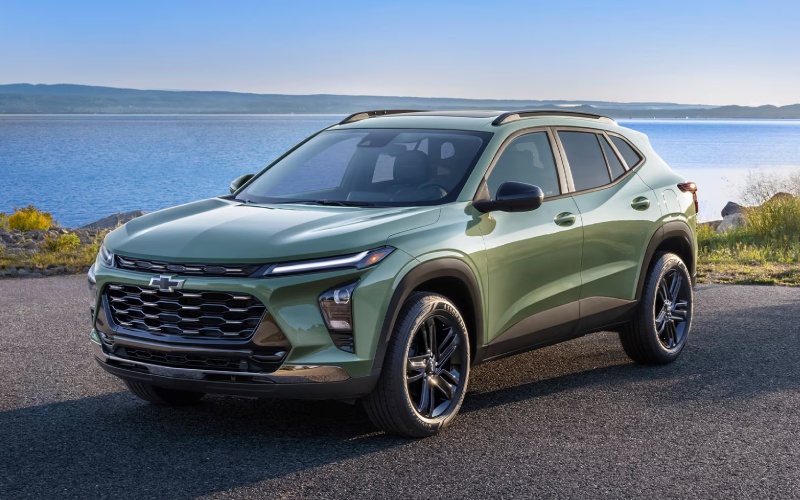
Alpine Chevrolet – Does the 2026 Chevrolet Trax have the cargo space Lone Tree, CO drivers need for everyday life and weekend escapes?
The 2026 Chevrolet Trax is built to make the most of tight parking lots near Park Meadows, early morning commutes along I-25, and spur-of-the-moment drives to Bluffs Regional Park. At Alpine Chevrolet, we meet shoppers from Lone Tree who want a small SUV that carries more than it looks like it should—without giving up maneuverability, efficiency, or tech. If you are wondering whether the Trax has the cargo room and everyday flexibility your routine demands, the short conclusion is that the 2026 Trax is engineered for exactly that balance.
Start with the numbers that matter. Trax offers up to 54 cu. ft. of max cargo space, a 60/40 split-folding rear seat, and seating for five adults. That combination gives you space for bulk grocery runs off Lincoln Avenue, a stroller plus a week’s worth of gear for Schweiger Ranch events, or luggage for a quick flight out of Centennial Airport. When you do not need the rear seats, fold one or both sides to make room for longer items, and keep a passenger comfortably buckled in. When you need the seats, the cabin’s thoughtful layout helps everyone settle in for the mile-high drives you make every day.
Trax also streamlines day-to-day life with technology that makes it easy to organize your trip before you roll out of the driveway. Standard wireless Apple CarPlay® and wireless Android Auto™ keep maps, playlists, and messages at your fingertips with no cords to juggle. An 11-inch center HD touch-screen is available, and on LT the cabin features an 11-inch diagonal color touch-screen and an 8-inch diagonal color Driver Information Center for clear, simple control. With available wireless charging, you can top off your phone while loading up the cargo area, and an available built-in Wi-Fi® hotspot helps everyone stay connected as you cruise along C-470 toward the foothills.
If you are visualizing how your gear fits, it helps to think in scenarios. For a Saturday at Cherry Creek State Park, fold the smaller side of the 60/40 split for a cooler and folding chairs while keeping space for three across the rear seat. For a ski day on I-70, use the longer side of the split for skis or a snowboard bag while still belting in a friend. For a home project run to Highlands Ranch or Castle Rock, flatten the rear seatbacks to free up the full cargo area. The flexible layout lets you adapt quickly as plans shift with Colorado’s weather—and we know they do.
From a driving standpoint, the 2026 Trax is pleasantly easy to live with when your day involves parking garages, school lanes, and quick merges. Its capable ECOTEC® 1.2L Turbo engine, with an EPA-estimated 30 MPG combined, helps you cover more errands between fill-ups while you run up and down Quebec and Yosemite in Lone Tree. That efficiency pairs naturally with the small-SUV footprint, so you do not need to trade away agility to gain the space you want behind the second row.
Safety and driver assistance also matter when you pack up the cargo area. Every 2026 Trax includes Chevy Safety Assist, a suite that features Forward Collision Alert, Automatic Emergency Braking, Front Pedestrian Braking, Lane Keep Assist with Lane Departure Warning, Following Distance Indicator, and IntelliBeam® High Beam Assist. When your view out back is filled with gear or you are navigating dusk near Lone Tree’s residential streets, these features add confidence so you can focus on the road and your surroundings. As always, features are there to assist—you remain in control of the drive—but it is reassuring support when your schedule is full and the SUV is, too.
Trim choice can tailor the way your Trax looks and feels as you manage daily cargo. If your style leans bold and adventurous, the ACTIV stands out with Black grille elements, Titanium chrome accents, unique interior touches, and 18-inch Black-painted aluminum wheels—an eye-catching match with colors like Cacti Green, White Sands, or Marina Blue Metallic. If you prefer a sporty persona, the 2RS brings Red interior accents, a race-inspired flat-bottom steering wheel, and Black exterior details with 19-inch machined two-tone wheels. LS, 1RS, and LT round out the lineup with the essentials, a sporty twist, or added comfort and tech. Regardless of trim, you get the same fundamental versatility that makes the Trax such an easy choice for errands around Lone Tree and weekend getaways to Roxborough State Park.
To help you picture fit, function, and daily ease, here is a quick cargo-clarity checklist we walk through with Lone Tree shoppers in our showroom.
- Max cargo space: 54 cu. ft. gives the Trax a surprising advantage for a small SUV when you fold the rear seats down.
- Seat flexibility: A 60/40 split-folding rear seat lets you carry longer items and still keep a passenger secure and comfortable.
- Everyday seating: Room for 5 seats most adults comfortably, ideal for commuting teams heading to the Denver Tech Center or school pickups.
- Tech that helps: Standard wireless Apple CarPlay® and wireless Android Auto™ reduce cable clutter when you are loading up.
- Trip-ready connectivity: An available built-in Wi-Fi® hotspot keeps everyone connected on the way to mountain trailheads or downtown events.
- Clear controls: An 11-inch center HD touch-screen is available, and LT includes an 11-inch diagonal color touch-screen with an 8-inch diagonal color Driver Information Center for at-a-glance info.
Those details cover the core, but cargo practicality also comes from how an SUV feels to use in the moment. The Trax’s hatch opening is easy to access in tight spots, and the rear seatbacks fold quickly when you need the extra room. Because the Trax is compact on the outside, parallel parking near Lone Tree Library is simpler, and weaving through crowded lots by the Lone Tree Arts Center is less stressful. Taken together, it is the everyday usability—matching the cargo you need with the agility you want—that makes customers tell us the Trax just fits Colorado life.
If you are cross-shopping, you may be wondering whether stepping up in size is necessary to get the flexibility you want. In our experience helping Lone Tree drivers, the Trax’s layout solves most use cases without moving to a larger footprint. The 60/40 split allows mixed passenger-and-gear days, while the flat cargo floor created by the folded second row makes bulk or awkward items easier to secure. Add in that EPA-estimated 30 MPG combined and the standard connectivity, and you have a small SUV that feels roomy on the inside and refreshingly simple to maneuver on the outside.
For a final bit of personalization, the 2026 Trax makes it fun to match your SUV to your taste. Whether you choose Mosaic Black Metallic to look sharp in the valet line, Sterling Gray Metallic for a refined everyday finish, or Cacti Green for an expressive pop in Colorado sunshine, the cargo capability stays the same—ready for farmers’ markets, gym bags, work totes, sports gear, and everything a busy Lone Tree schedule requires.
If cargo space and everyday flexibility are at the top of your list, we invite you to see the 2026 Trax in person at Alpine Chevrolet in Aurora. We are a short drive from Lone Tree via E-470 or I-225, and our team will help you fold seats, load sample gear, pair your phone to wireless Apple CarPlay® or wireless Android Auto™, and experience how the Trax handles your real-world routine. When a small SUV is this thoughtfully designed, you feel it the first time you open the hatch.
Frequently Asked Questions:
What is the max cargo space in the 2026 Chevrolet Trax?
Trax offers up to 54 cu. ft. of max cargo space when you fold the rear seats, giving you room for bulk shopping, sports equipment, and weekend travel essentials.
How flexible is the second row in the Trax for mixed passenger-and-gear days?
The 60/40 split-folding rear seat lets you fold one side for longer items while keeping space for passengers, which is especially useful for ski bags, strollers, or home-improvement supplies.
How many people can the 2026 Trax seat comfortably?
Trax seats 5 and fits most adults comfortably, supporting carpooling to the Denver Tech Center or family drives to nearby parks.
Which Trax trims include the larger touch-screen and added driver info features?
An 11-inch center HD touch-screen is available across the lineup, and LT includes an 11-inch diagonal color touch-screen and an 8-inch diagonal color Driver Information Center. Availability of specific features varies by trim—our team can walk you through LS, 1RS, LT, 2RS, and ACTIV to match your priorities.
What driver assistance features help when the cargo area is full?
Every Trax includes Chevy Safety Assist, featuring Forward Collision Alert, Automatic Emergency Braking, Front Pedestrian Braking, Lane Keep Assist with Lane Departure Warning, Following Distance Indicator, and IntelliBeam® High Beam Assist. These systems support safe driving as you manage busy Lone Tree traffic and changing weather.
Does the 2026 Trax include modern connectivity for road trips?
Yes. Standard wireless Apple CarPlay® and wireless Android Auto™ make connecting simple. You can also get an available built-in Wi-Fi® hotspot and available wireless charging to keep everyone powered and online from Lone Tree to the foothills.
Ready to see how the 2026 Chevrolet Trax fits your daily rhythm near Lone Tree, CO? Visit Alpine Chevrolet in Aurora to explore cargo configurations, try the tech, and take a test drive. We will help you configure a Trax—LS, 1RS, LT, 2RS, or ACTIV—that matches your style and supports the way you live, work, and explore the Front Range.
Request more 2026 Chevrolet Trax information
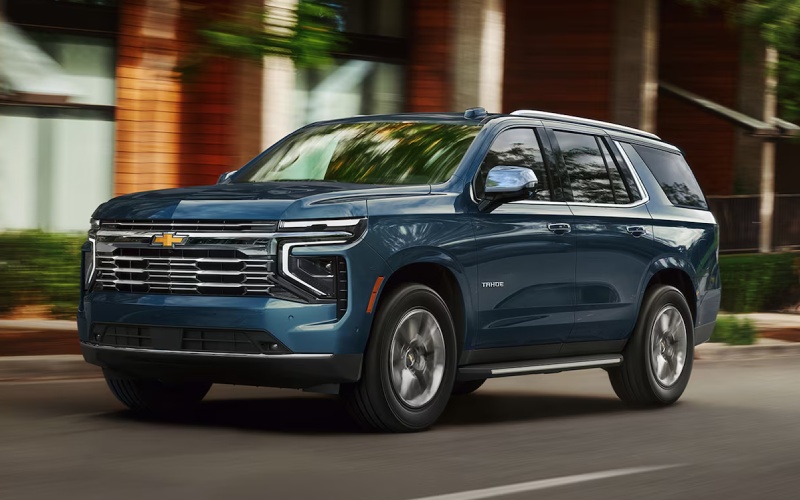
Alpine Chevrolet – Chevrolet SUVs vs Subaru for High-Altitude Winter and I-70 Weekends near Denver, CO
Living and driving at 5,280 feet asks different questions of your SUV. At Alpine Chevrolet, we talk every day with Denver and Aurora drivers who split time between weekday commutes on I-225 and weekend runs up I-70 to Loveland, Copper, or Winter Park. Many of those shoppers are weighing Chevrolet against Subaru. Both brands are known for confident traction and safety, but the way they solve Colorado’s altitude, weather, and terrain is meaningfully different. Below, we compare how Chevrolet and Subaru SUVs handle high-elevation power, winter control, mountain descents, cabin tech, and cold-weather EV driving—so you can choose the right setup for your driveway, ski rack, and lifestyle.
Start with traction philosophy. Subaru is rightly known for its Symmetrical All-Wheel Drive, standard on nearly every Subaru SUV, paired with X-MODE on many trims for low-speed slippery surfaces. Chevrolet answers with a broader toolbox. Across our SUV lineup—from Trax and Trailblazer to Equinox, Blazer, Traverse, Tahoe, and Suburban—AWD is widely available, with Driver Mode Selector that can tailor throttle, shift logic, and traction for Snow/Ice. On our body-on-frame SUVs and trucks, available 4×4 with a 2-speed transfer case adds true low-range control that Subaru does not offer, which matters when easing a boat up a snowy ramp at Chatfield or pulling away from a plowed but polished trailhead lot. StabiliTrak Electronic Stability Control System is standard on Chevrolet SUVs, and features like Hill Descent Control, Off-Road mode calibrations, underbody protection on Z71, and available all-terrain tires build confidence when conditions shift between slush, packed powder, and windblown drifts along Floyd Hill.
Altitude power is another difference Denver-area drivers feel. Air gets thin above 5,000 feet, which reduces output on naturally aspirated engines. Many Chevrolet SUVs use turbocharged engines that better maintain power at elevation, including Trax, Trailblazer, and Equinox. Larger Chevrolet SUVs offer strong V8 power and the available Duramax® 3.0L Turbo-Diesel in Tahoe and Suburban for high-torque pull and composed downhill braking with the 10-speed automatic. Subaru offers turbocharged choices in select models, but several of its most-shopped SUVs rely on naturally aspirated flat-fours. Around town that’s fine; on a full car up US 285 to Kenosha Pass at 9,997 feet, you will likely appreciate the altitude resilience of Chevrolet’s turbocharged lineup and the extra muscle available on our full-size SUVs.
Descending matters as much as climbing. Every winter, I-70 reminds us that control is a system—not just brakes. Chevrolet leans into integrated downhill management: Auto Grade Braking can help reduce brake fade on long grades like the Eisenhower Tunnel approach, Tow/Haul mode optimizes shift points for engine braking, and Hill Descent Control can keep speeds steady on rutted, snow-packed side roads. Subaru’s X-MODE brings helpful low-speed control for slippery hills, and that’s a plus in tight neighborhood descents. If your routine includes towing a pop-up to Golden Gate Canyon or a dual-sport trailer to Rampart Range, Chevrolet’s broader trailering feature set—Hitch Guidance with Hitch View, an in-vehicle Trailering App, and available HD Surround Vision—adds usable confidence when the weather turns and daylight disappears early.
- Altitude-friendly performance: Chevrolet’s widespread turbocharged engines and available Duramax® diesel maintain power at elevation, while many Subaru SUVs use naturally aspirated engines that can feel flatter above 5,000 feet.
- Traction toolset: Subaru’s standard Symmetrical AWD is excellent; Chevrolet counters with selectable drive modes across the lineup and true 4×4 with a 2-speed transfer case on body-on-frame SUVs and trucks.
- Mountain control: Chevrolet features like Auto Grade Braking, Tow/Haul, Hill Descent Control, and available HD Surround Vision support safer I-70 descents and trailhead approaches.
- Trailering versatility: Chevrolet SUVs offer significantly higher tow ratings and more camera-based guidance than Subaru’s car-based SUVs.
- Hands-free highway help: Available Super Cruise™ on select Chevrolet models allows hands-free driving on compatible roads, a feature Subaru does not offer.
Cabin tech for long Colorado days is more than entertainment. Most new Chevrolet SUVs include Chevy Safety Assist with Forward Collision Alert, Automatic Emergency Braking, Lane Keep Assist with Lane Departure Warning, Following Distance Indicator, and IntelliBeam auto high beams. Available HD Surround Vision helps with visibility in tight, snowbank-lined lots off Colfax or Broadway. Wireless Apple CarPlay® and Android Auto™ plus Google built-in make it easy to call in a food pickup on the return from Eldora. OnStar® Safety & Security is there for the unexpected and can be a reassuring partner in winter. Subaru’s EyeSight® Driver Assist Technology is a strong suite with adaptive cruise control and lane centering. The distinction is on the highway: select Chevrolet models add Super Cruise™, allowing hands-free driving on compatible roads such as I-25 and key stretches of I-70, subject to conditions and driver attentiveness—an advantage during long, evening returns when wind and plow ruts demand steady focus.
Cold-weather EV ownership is also evolving fast along the Front Range. Chevrolet offers Equinox EV, Blazer EV, and Silverado EV with Ultium-based thermal management and available features like cabin preconditioning through the myChevrolet Mobile App to help preserve range and comfort when temps drop below freezing. Available Super Cruise™ on select EVs adds long-haul ease on compatible roads between Denver and Summit County. Subaru’s Solterra brings AWD confidence in a compact form. As with any EV in winter, the keys are preheating while plugged in, using seat and steering wheel heat to ease HVAC load, and planning DC fast charging near Silverthorne, Idaho Springs, or along US 36 on busier weekends. Our team can walk you through EV route planning and home charging tailored to Colorado winters.
- Map a real test loop. Combine freeway climbs, an older plowed neighborhood street, and a few stop-and-go segments—think I-225 to Hampden, then out toward E-470 on-ramps for merging feel.
- Try Snow/Ice or AWD modes. Toggle Drive Mode Selector on a safe, straight road to feel throttle and shift changes that matter when traction is low.
- Load the cabin. If you regularly carry skis, boards, or a full carpool, bring gear to check cargo fit, roof rail access, and rear-seat comfort with winter layers.
- Practice parking. Test camera views and sensors backing into a space surrounded by snowbanks where sightlines are reduced.
- Simulate a descent. On a safe grade, feel engine braking behavior with and without Tow/Haul engaged if you plan to tow.
Space and towing flexibility are practical differentiators. Subaru’s Ascent offers three-row seating with solid cargo space, but Chevrolet’s full-size Tahoe and Suburban deliver more room for people and gear, with third rows that suit teens and adults along with expansive cargo for coolers, boot bags, and a dog crate. When you add a camper, drift boat, or enclosed sled trailer to the picture, Chevrolet’s tow ratings and trailering features outpace Subaru by a wide margin. Even in our compact and midsize SUVs, hands-free liftgates, split-fold seating, and low load floors keep winter gear changes easy at the base area or the youth hockey rink.
Ownership support matters as much as the badge. At Alpine Chevrolet in Aurora, our Certified Service team understands how altitude, freeze-thaw cycles, and mag chloride affect brakes, batteries, and tires. We help set up winter tire packages, all-weather floor liners, splash guards, and remote start through the myChevrolet Mobile App to make your mornings simpler. Our people-first approach means clear guidance whether you are choosing an AWD small SUV for city streets or a 4×4 full-size SUV for mountain towing. We are here to help you compare both brands fairly and find the Chevrolet that fits your life along the Front Range.
Frequently Asked Questions:
Is AWD or 4×4 better for Colorado driving?
Both work well. AWD, common on many Chevrolet and Subaru SUVs, is great for mixed traction and everyday winter driving. If you tow, travel on unmaintained roads, or want low-speed control in deep snow, a Chevrolet 4×4 with a 2-speed transfer case provides extra capability.
Do turbocharged engines really help at altitude?
Yes. Turbochargers compress thinner high-altitude air, helping engines maintain power. Many Chevrolet SUVs use turbo engines that feel more responsive at 5,000 to 10,000 feet compared with naturally aspirated engines. Always use fuel recommended in your owner’s manual.
Can I use Super Cruise™ in winter conditions?
Super Cruise™ can allow hands-free driving on compatible roads when lane lines are visible and conditions permit. As with any driver-assistance feature, weather, visibility, and road markings affect availability. You must remain attentive and ready to take control at all times.
Which Chevrolet SUVs offer a 2-speed transfer case?
Body-on-frame SUVs and trucks such as Tahoe and Suburban offer available 4×4 with a 2-speed transfer case for true low-range capability. Our team can help you select the right configuration for how and where you drive.
What winter accessories do you recommend for Denver-area driving?
We commonly suggest winter tires, all-weather floor liners, roof cross rails, splash guards, and a cargo tray. Remote start via the myChevrolet Mobile App and heated steering wheel availability also make cold mornings easier.
Choosing between Chevrolet and Subaru near Denver ultimately comes down to how you use your SUV. If your life is school runs in slush, Saturday powder at Mary Jane, and a summer camper weekend at Steamboat Lake, Chevrolet delivers a broader range of altitude-ready powertrains, true 4×4 hardware, trailering tech, and hands-free highway capability—backed by our Alpine Chevrolet team in Aurora that understands Colorado conditions firsthand. Visit us at 14500 E Colfax Ave to test-drive in real Front Range traffic and feel the difference where it matters. Chevrolet: Together Lets Drive.
Request more information
Snow-and-Grade Confidence near Arvada, CO — Chevrolet AWD SUVs vs Subaru for Mountain Commutes
Alpine Chevrolet – Snow-and-Grade Confidence near Arvada, CO — Chevrolet AWD SUVs vs Subaru for Mountain Commutes
Colorado driving changes hour by hour, and near Arvada, CO that can mean dry pavement on Wadsworth in the morning, wet slush around Olde Town by lunch, and a snow-packed climb toward Golden or Coal Creek Canyon by sunset. At Alpine Chevrolet, we help shoppers choose vehicles that feel planted on slick side streets, stable descending I-70 grades, and easy to live with when the sun comes out again. If you are deciding between Chevrolet and Subaru, this comparison focuses on what matters most for Front Range life: predictable winter traction, downhill control on long grades, cargo flexibility for mountain gear, and confidence-inspiring driver assistance for daily commuting.
We will compare popular Chevrolet SUVs and trucks alongside Subaru SUVs you may also consider. Our goal is to share accurate, helpful insights that reflect real conditions around Arvada and the foothills, while highlighting how Chevrolet engineering and our local support can make your time behind the wheel calmer and more capable all year.
All-weather traction and control: selectable strength vs always-on confidence
Subaru has earned a reputation for sure-footed grip thanks to standard Symmetrical All-Wheel Drive on most models and available X-MODE for low-speed traction management. Many Arvada shoppers appreciate that “always ready” feel on variable surfaces, and Subaru ground clearance is competitive in the compact and midsize SUV classes. Chevrolet counters with a broad menu of AWD and 4×4 systems tuned for Colorado variety. Select Chevrolet crossovers offer switchable AWD, allowing you to engage AWD when storms roll in and run in front-wheel drive on dry days for an efficient, direct feel. On performance-leaning and premium trims, available twin-clutch AWD systems can proactively split torque between the rear wheels to help power through off-camber, rutted turns you might find on gravel roads to trailheads near North Table Mountain.
For deeper snow, rocky pull-outs, and steeper grades, Chevrolet body-on-frame SUVs and trucks step up with available 2-speed transfer cases, Autotrac 4×4, selectable drive modes, and features such as Hill Descent Control on select models. That range means you can choose the level of capability you truly need—from an agile AWD small SUV that shrugs off a Ralston Creek trailhead’s muddy exit to a Tahoe or Silverado built to push through drifted county roads after a spring storm. Both brands deliver winter traction; Chevrolet gives you more ways to match capability to how and where you drive.
Downhill and towing confidence on the Front Range’s long grades
Arvada drivers frequently encounter long descents—think westbound U.S. 6 into Golden or prolonged downhill stretches returning from Eldora or Winter Park. Controlling speed without riding the brakes is key. Chevrolet brings a deep bench of grade-savvy hardware and software across SUVs and trucks: Automatic Grade Braking, available engine braking calibration with modern multi-speed transmissions, Hill Start Assist, Trailer Sway Control, and—on select models—an in-vehicle Advanced Trailering System with a Trailering App, Hitch Guidance, and Hitch View. The result is a steadier feel with or without a trailer, plus easier one-person hitching in tight Olde Town parking or at a boat ramp on Standley Lake.
Subaru SUVs offer Hill Descent Control within X-MODE and the Ascent can tow up to 5,000 pounds, which covers many small campers or a pair of sleds. Where Chevrolet clearly stretches ahead is in comprehensive trailering technology and available heavy-duty chassis options. From Colorado and Silverado 1500 to Tahoe and Suburban, Chevrolet offers integrated trailer brake controllers, multiple camera views, and trailering-specific diagnostics designed for the mountains. If your weekends include towing a drift boat to the Colorado River or a compact camper up to Golden Gate Canyon State Park, Chevrolet’s tow-friendly tech and model variety deliver measurable peace of mind on the grade down and the merge back onto I-70.
Cold-weather comfort and everyday tech that fits Colorado life
Both Chevrolet and Subaru offer heated seats and heated steering wheels, which makes those early powder-day departures a lot more pleasant. Chevrolet layers in conveniences that matter around Arvada’s mix of garages and street parking: the myChevrolet Mobile App with Remote Start, a programmable power liftgate on many SUVs that helps in low-clearance garages, and available hands-free liftgate operation when your hands are full of skis or groceries from the farmers’ market. Wireless Apple CarPlay and Android Auto are broadly available across Chevrolet SUVs and trucks, simplifying cord-free navigation and music when gloves are on and temps are low. Subaru models also offer smartphone integration, with wireless capability on select vehicles.
On the safety side, Subaru EyeSight Driver Assist Technology is well regarded and widely available. Chevrolet Safety Assist is standard on many Chevrolet SUVs and includes Forward Collision Alert, Automatic Emergency Braking, Lane Keep Assist with Lane Departure Warning, Following Distance Indicator, and IntelliBeam auto high beams. Chevrolet also offers available Super Cruise hands-free driver assistance on select models such as Tahoe and Silverado, which can reduce fatigue on long I-70 or E-470 stints. Add available OnStar safety and security services and you have a broad safety net, whether you are dealing with a surprise squall near Lookout Mountain or stop-and-go congestion on U.S. 36.
Cargo and versatility for skis, bikes, and everyday errands
Both brands understand Colorado cargo. Subaru SUVs make smart use of space, and roof rails are widely available. Chevrolet expands the versatility playbook: Tahoe and Suburban deliver expansive three-row flexibility and serious cargo volume for family ski trips, while Traverse and Blazer pair generous second-row legroom with fold-flat solutions that make hauling a mountain bike simple. In pickups, Chevrolet’s available Durabed design and integrated bed lighting help with pre-dawn gear organization, while accessories such as cross rails and hitch-mounted carriers let you tailor any Chevrolet to your hobbies.
To help you quickly match your needs to the right brand approach, here is how we coach Arvada shoppers who are weighing both lineups.
- If you want always-on AWD with a familiar feel in compact and midsize SUVs: Subaru delivers standard Symmetrical All-Wheel Drive on most models, while Chevrolet offers switchable and advanced AWD systems tailored to trims and use.
- If your lifestyle includes regular towing in the foothills: Chevrolet SUVs and trucks bring integrated trailering tech, available multi-camera views, and chassis options built for grades, clearly outpacing Subaru’s otherwise competent towing baseline.
- If you split time between Denver commutes and weekend dirt: Chevrolet’s range—from agile small SUVs to rugged 4x4s with a 2-speed transfer case—lets you choose exactly the right level of hardware for your routes and trailheads.
- If you value advanced hands-free assistance on long highway drives: Select Chevrolet models offer available Super Cruise, while Subaru does not offer a comparable hands-free system at this time.
- If winter ergonomics and easy loading matter day to day: Chevrolet’s available programmable power liftgate, hands-free operation, and the myChevrolet Mobile App with Remote Start complement the heated amenities offered by both brands.
Service, support, and a people-first experience
Capability matters, but so does the team behind your vehicle. At Alpine Chevrolet in Aurora, we serve drivers across Arvada and the northwest metro with Chevrolet Certified Service, GM Genuine Parts, and multi-point inspections designed to keep your vehicle prepared for freeze-thaw cycles, potholes, and seasonal tire changes. Our bilingual, people-first staff makes maintenance clear and convenient so you can focus on the road ahead—whether that is a powder day on Berthoud Pass or a quick sprint to Ralston Central Park with the kids.
If you are comparing Chevrolet and Subaru for life near Arvada, CO, our advice is simple: think about the steepest grade you drive, the worst storm you will venture out in, and the gear you move most weekends. Subaru brings a strong AWD baseline. Chevrolet gives you that, plus scalable hardware, advanced trailering tools, and hands-free technologies that shine in Colorado. Visit us to test-drive back to back and feel the difference where it counts—on the roads you use every day.
When you are ready, our team can help you build a shortlist across sizes—from small and midsize SUVs to full-size SUVs and pickups—and set up looped test routes that simulate your commute and your favorite mountain approach.
- Tell us about your daily drive and weekend plans.
- We will map a test route that mimics your terrain.
- Compare traction modes, downhill control, and driver assistance with a specialist in the passenger seat.
- Review accessory options for skis, bikes, and camping gear.
- Set up a service plan that keeps you ready for the next change in weather.
Frequently Asked Questions:
Is AWD or 4×4 better for Arvada snow and foothill driving?
Both work well when matched to how you drive. AWD in Chevrolet crossovers provides confident, automatic traction for plowed streets and variable surfaces. 4×4 systems in Chevrolet SUVs and trucks add low-range gearing and more robust hardware for deeper snow, rutted access roads, and steeper grades. We help you choose based on your routes and winter habits.
What Chevrolet features help on long downhill grades?
Automatic Grade Braking, available engine braking, Hill Start Assist, and—on select models—Hill Descent Control help manage speed without riding the brakes. If you tow, available Trailer Sway Control, an integrated trailer brake controller, and an in-vehicle Advanced Trailering System with Hitch Guidance and Hitch View add stability and confidence.
How does Chevrolet Safety Assist compare with Subaru EyeSight?
Both suites provide core driver assistance such as Automatic Emergency Braking and Lane Keep Assist. Chevrolet Safety Assist is standard on many Chevrolet SUVs, and select Chevrolet models also offer available Super Cruise hands-free driver assistance for compatible roads, which Subaru does not offer. We recommend a test drive to experience how each system feels to you.
Do I need winter tires if I have AWD?
AWD helps you go; winter-rated tires help you stop and turn on cold, slick pavement. For frequent snow days or trips into the foothills, we strongly recommend a quality set of winter tires mounted on dedicated wheels. Our Chevrolet Certified Service team can advise on size, storage, and seasonal changeovers.
Can Alpine Chevrolet support me if I live in Arvada?
Absolutely. Our Aurora location is a quick drive from Arvada via I-70 or I-76, and our team schedules service to fit your day. We offer multi-point inspections, GM Genuine Parts, and a people-first approach that keeps your Chevrolet ready for whatever Colorado throws at it.
Ready to compare in person? Visit Alpine Chevrolet at 14500 E Colfax Ave in Aurora, or call 303-344-3100 to set your test drive. We will tailor the experience to your Arvada routes so you can feel the traction, control, and comfort that make Chevrolet a smart choice for mountain commutes and weekend escapes.
Request more information
High-Altitude Cooling and Grade Control near Denver, CO — Chevrolet SUVs and Trucks vs Toyota
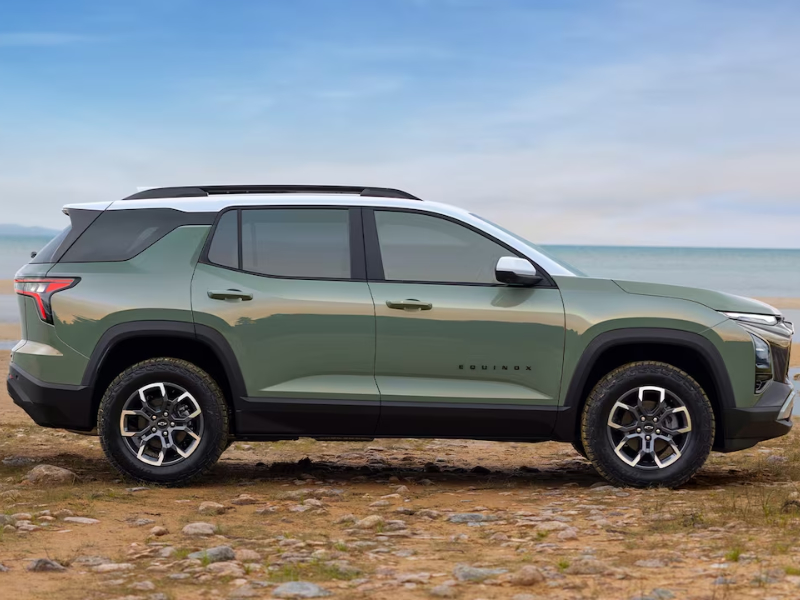
Alpine Chevrolet – High-Altitude Cooling and Grade Control near Denver, CO — Chevrolet SUVs and Trucks vs Toyota
Mountain driving changes the conversation, and here along the Front Range, high-altitude power, cooling performance, and confident descents matter just as much as traction. At Alpine Chevrolet in Aurora, we talk with shoppers who are comparing Chevrolet to Toyota for weekend I-70 trips, ski-season traffic over Floyd Hill, and summer trailering to Dillon or Grand Lake. Below is a clear, real-world comparison focused on how both brands approach altitude, grades, and trailering, with helpful guidance for test drives near Denver, CO.
Thin air at 5,280 feet — and much higher at the Eisenhower/Johnson Tunnels — reduces naturally aspirated engine output and makes cooling systems work harder on long climbs. That is exactly where powertrain design, grade-control software, and trailering tech separate good from great. Chevrolet SUVs and trucks offer a wide span of torque-rich engines, advanced grade management, and camera-based towing features that help on both the climb and the descent. Toyota counters with proven 4×4 systems, turbocharged and hybrid options on key models, and driver-assist features aimed at rough terrain. The best choice depends on your mix of altitude, load, and everyday driving — and we are here to walk through each factor.
Start with powertrains. Many Chevrolet models are engineered for Colorado’s elevation swings, from turbocharged four-cylinder options in small SUVs to available V8 power in full-size SUVs and a high-torque Duramax diesel in select pickups. Turbocharging and diesel boost help retain performance at altitude, and Chevrolet pairs that with tow-focused transmissions and cooling packages. Toyota’s newer turbocharged and hybrid systems (such as the turbo four in several SUVs and the twin-turbo V6 hybrid in larger vehicles) also aim to deliver strong torque with improved efficiency. Both brands can be excellent at altitude, but the way they handle heat and grade control under load is where Chevrolet often pulls ahead for mountain commuters and frequent towers.
For drivers planning frequent I-70 climbs, boat ramps at elevation, or hauling gear to trailheads above Idaho Springs, the following Chevrolet advantages stand out in day-to-day use.
- Altitude-ready torque: Available turbocharged engines and the Duramax diesel in select Chevrolet pickups help maintain strong pull on long grades where naturally aspirated engines can feel taxed.
- Built-in cooling: Chevrolet trailering packages typically include auxiliary coolers and hardware tuned for sustained climbs and hot summer traffic on I-25 — a confidence boost when the temperature and elevation both rise.
- Intelligent grade control: Tow/Haul Mode, Automatic Grade Braking, and available Hill Descent Control help manage speed on the Georgetown Grade and similar descents, reducing brake wear and driver fatigue.
- Camera-based confidence: The available Advanced Trailering System with multiple camera views — including Transparent Trailer View on select configurations — simplifies lane changes, merges, and backing at crowded trailheads.
- Hands-free capability: Available Super Cruise on select Chevrolet models works on compatible divided highways and can be enabled while towing, delivering steady lane control on long Front Range stretches.
- Stability built in: StabiliTrak Electronic Stability Control with Trailer Sway Control is designed for gusty high-plains crosswinds and canyon gusts between Golden and Silver Plume.
Toyota brings meaningful strengths to the same use cases. Shoppers drawn to Toyota’s reputation for long-term durability and off-road versatility will find a lot to like, especially in models with terrain systems and turbo or hybrid powertrains. Here are areas where Toyota models may appeal in Colorado.
- Turbo and hybrid options: Widespread use of turbocharged and hybrid systems across Toyota SUVs and trucks provides responsive torque and potential efficiency benefits at elevation.
- Trail-focused features: Available Crawl Control, Downhill Assist Control, and Multi-Terrain Select on specific Toyota models offer sure-footed behavior on loose surfaces and technical forest roads.
- Standard driver assists: Toyota Safety Sense provides a robust suite of driver-assistance features across much of the lineup, supporting everyday commuting along E-470 and I-225.
- Proven 4×4 heritage: Traditional body-on-frame SUVs and trucks from Toyota have a long track record of off-road dependability that appeals to backcountry explorers.
Beyond power and traction, grade management is where mountain drivers often feel the biggest day-to-day difference. Many Chevrolet SUVs and trucks are tuned to automatically downshift on prolonged descents, helping maintain a set speed with less brake input. Add the available integrated trailer brake controller and Trailer Side Blind Zone Alert on select models, and descending from Loveland Pass detours or Idaho Springs construction zones becomes more predictable. Toyota models offer similar ideas with Tow/Haul modes, integrated trailer brake controllers on key trucks, and multi-view cameras; the specific availability varies by model and trim, so a back-to-back test on familiar grades is invaluable.
What about everyday SUV life near Denver? For school runs in Aurora, weekend hikes near Evergreen, and occasional powder-day trips to Summit County, Chevrolet’s SUV lineup offers a wide spread of AWD systems — including Auto mode in select vehicles that can proactively engage the front axle in changing conditions. Small SUVs like Trailblazer and Equinox bring easy maneuverability and snow-friendly traction, while Traverse, Tahoe and Suburban deliver family space and advanced trailering for camping season. Toyota’s SUV family counters with popular options across similar sizes, with available dynamic torque-splitting AWD and terrain modes that shine on gravel and rutted access roads. Both brands offer comprehensive active-safety suites — Chevy Safety Assist on many Chevrolet SUVs and Toyota Safety Sense on many Toyota SUVs — with features such as Automatic Emergency Braking, Front Pedestrian Braking, and Lane Keep Assist with Lane Departure Warning to support confident daily driving.
Because so many Denver-area shoppers split time between city streets and mountain passes, we recommend a route and checklist built around your life, not a short spin around the block. Use the steps below to evaluate any SUV or truck for altitude and grade readiness.
- Simulate your weekend: Start on surface streets in Aurora, merge onto I-225 or I-70, and include at least one steady climb to monitor response and temperatures.
- Check cooling behavior: Observe available engine and transmission temperature readouts during the climb, then note how quickly they stabilize afterward.
- Test descent control: Engage Tow/Haul, verify Automatic Grade Braking if equipped, and confirm the vehicle maintains a set speed with minimal brake input.
- Evaluate trailering tech: If you tow, ask to demo the integrated brake controller, hitch guidance, and multi-view cameras for backing and lane changes.
- Confirm AWD/4×4 logic: In a safe area, feel for seamless engagement in Auto modes or selectable 4×4 modes and verify the control layout is intuitive with gloves.
At Alpine Chevrolet, our team is based in Aurora and drives the same passes and plains our customers do. We are proud to be powered by respect — our people-first approach means we match features to your routes, your gear, and your passengers, not the other way around. Whether you need a small AWD SUV for winter trailheads, a three-row with confident grade control for camping trips, or a truck engineered for altitude towing, we are ready to help you compare Chevrolet and Toyota with mountain-focused test drives near Denver, CO.
Frequently Asked Questions:
Does altitude really reduce engine power, and how do Chevrolet and Toyota address it?
Yes. Naturally aspirated engines typically lose noticeable power at altitude. Both brands use turbocharging and, in Chevrolet’s case, the available Duramax diesel on select trucks to help maintain torque on long grades. Turbocharged and diesel engines compress intake air, which helps offset the lower air density found at Colorado elevations.
What features help with long descents on I-70?
On many Chevrolet SUVs and trucks, Tow/Haul Mode and Automatic Grade Braking assist with speed control by downshifting to increase engine braking. Available Hill Descent Control further stabilizes low-speed descents on rough roads. Toyota offers similar capabilities on select models, including Tow/Haul functions and downhill assist systems. Availability varies by model and trim for both brands.
Is diesel a good choice for towing at altitude?
Diesel engines are turbocharged and produce strong low-end torque, which is helpful for climbing grades with trailers. The available Duramax diesel in select Chevrolet pickups is designed for sustained pulling and can be paired with trailering packages and, on certain heavy-duty models, an exhaust brake for added descent control. Your trailer weight, frequency of mountain trips, and daily commute should guide the decision.
Do I need 4×4 for mountain driving near Denver, or is AWD enough?
For paved winter driving and light gravel roads, modern AWD systems in many Chevrolet SUVs perform very well. If you regularly travel unmaintained roads, camp on rutted access paths, or tow on steep dirt surfaces, a 4×4 vehicle with low range and appropriate tires is a smart step up. Toyota offers comparable systems on select models; compare specific terrain features based on your routes.
Does Super Cruise work in Colorado, and can it be used while towing?
Available Super Cruise works on compatible divided highways and can be used while towing on select Chevrolet models. It is designed to help with long, steady drives such as I-25 and portions of I-70. Always review the Owner’s Manual for limitations and remain attentive to changing mountain conditions.
If you are deciding between Chevrolet and Toyota for life near Denver, CO, bring us your routine — the pass you climb, the trailer you pull, and the family you carry. Our team will map a test route that includes grades, merges, and stops that mirror your days, then show how Chevrolet powertrains, grade control, and trailering tech handle the climb, the crest, and the descent. Visit Alpine Chevrolet in Aurora to experience the difference first-hand, from small AWD SUVs to full-size SUVs and trucks engineered for Colorado elevations.
Request more information
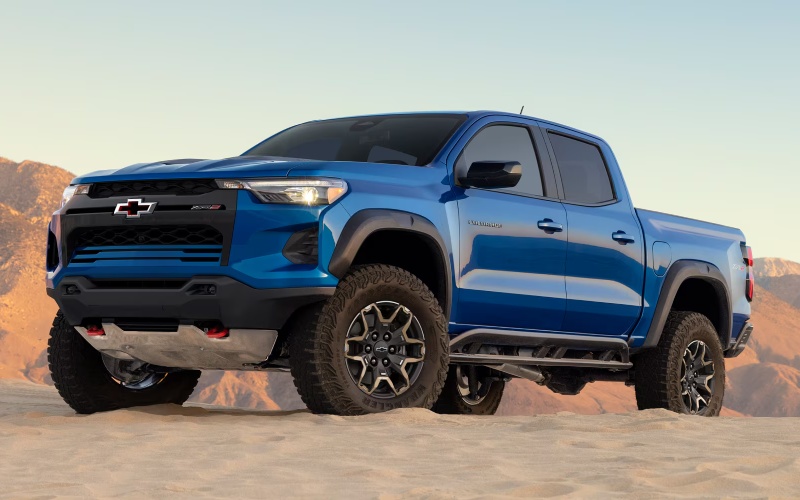
Alpine Chevrolet – High-Plains Wind and Winter Traction near Commerce City, CO — Chevrolet vs. Subaru
Colorado’s Front Range can throw four seasons at you in one day, and drivers near Commerce City know that the mix of high-plains crosswinds on I-76 and I-270, sudden snow squalls rolling off the Rockies, and slushy evening commutes demands a vehicle brand built for traction, stability, and everyday confidence. At Alpine Chevrolet in Aurora, we talk with shoppers every day who are cross-shopping Chevrolet and Subaru because both brands are known for all-weather poise. Below, we compare the two through one very specific lens—how each brand’s SUVs, trucks, and EVs handle gusty, fast-changing conditions around Commerce City—so you can choose with clarity.
Rather than isolate two models, we step back and look at the brand-level strengths by body style: small and compact SUVs for daily commuting, three-row SUVs for families, trucks for work and trailers, and a fast-growing slate of EVs for drivers moving to electric. Our goal is to be candid and helpful while showing where Chevrolet can deliver extra confidence for the roads you drive most.
Let’s start with traction strategy. Subaru’s Symmetrical All-Wheel Drive is standard on most of its lineup and pairs well with X-Mode for low-speed control on slick surfaces. Chevrolet takes a versatile approach across body styles. Many Chevy SUVs feature switchable AWD for efficiency on dry pavement and confident traction when you need it; the Trailblazer adds an available dual-clutch AWD system designed to send torque side-to-side across the rear axle to help maximize grip in mixed conditions. Step up to larger SUV and truck platforms and you’ll find available AutoTrac 4×4, locking differentials, and drive modes (including Snow or Off-Road modes on select models) you can tailor to the day’s weather. Every Chevrolet also benefits from StabiliTrak® Electronic Stability Control, which helps keep you pointed where you steer when gusts hit along E-470 or the viaducts that funnel wind across the South Platte.
Crosswind stability is where vehicle size and chassis tuning matter. Subaru’s lineup tops out with a capable three-row Ascent. If your daily routine includes I-76’s frequent semitruck turbulence, a longer wheelbase and a broader track can calm the ride. Chevrolet offers multiple three-row options—Traverse for families that value lighter weight agility and Tahoe for drivers who prefer the planted stance of a full-size SUV. Tahoe’s body-on-frame construction and wide footprint tend to feel composed in lateral gusts, and available 4×4 configurations bring confident traction when the weather turns. If you split time between Commerce City and job sites on the Eastern Plains, that extra stability can make a long day less tiring.
Trailering adds another layer. Subaru’s family SUVs can tow smaller loads for weekend projects or camping, but if you’re moving a side-by-side, a pair of sleds, or a utility trailer, many Commerce City shoppers step into Chevrolet’s truck and full-size SUV lineup. Chevrolet integrates Trailer Sway Control within StabiliTrak® and offers a deep bench of trailering aids—camera views, hitch guidance, and available in-vehicle checklists—that help reduce stress when crosswinds pick up past the Purina plant or along the open stretches near Barr Lake. Subaru delivers steady composure for modest trailers; Chevrolet expands your margin with hardware and software built for bigger loads.
Advanced driver assistance is strong for both brands. Subaru’s EyeSight Driver Assist Technology has earned a solid reputation for smooth adaptive cruise and lane support. Chevrolet counters with Chevy Safety Assist on most SUVs—a bundle that includes Automatic Emergency Braking, Front Pedestrian Braking, Lane Keep Assist with Lane Departure Warning, Following Distance Indicator, and IntelliBeam auto high beams. Where Chevrolet creates clear separation is Super Cruise™—available on select Chevrolet models—which enables hands-free driving on compatible roads. That includes many Front Range corridors, making longer drives to DIA or cross-town commutes on I-270 more relaxed. Super Cruise™ can even assist on certain models while towing on compatible roads, bringing a premium capability Subaru does not offer today.
Cabin usability in winter is another real-world factor. Subaru emphasizes high-visibility cabins and washable cargo areas, which families love. Chevrolet answers with expansive interior flexibility across sizes: Trailblazer and Equinox for compact agility, Traverse with adult-friendly third-row space, and Tahoe for true full-size comfort and cargo. Many Chevrolet models offer available heated front and rear seats, heated steering wheels, and remote start via the myChevrolet mobile app with an eligible OnStar® plan—amenities you appreciate when an overnight cold front dusts the neighborhood around Reunion or Derby. If your weekends include skis, snowboards, or hockey bags, Chevrolet’s broad cargo and seating configurations make winter gear management simple.
Electric driving is growing along the Front Range, and cold-weather capability matters for EV shoppers, too. Subaru’s Solterra offers capable all-electric AWD. Chevrolet, however, gives you choices: Equinox EV and Blazer EV for SUV shoppers, and Silverado EV for drivers who want electric torque with truck practicality. With available all-wheel-drive configurations and features designed to optimize efficiency in colder temps, Chevrolet’s EV portfolio scales from daily commuting around Commerce City to mountain-day getaways—plus our Certified Service team is trained to support both EV and gas-powered Chevrolet vehicles with GM Genuine Parts and ACDelco parts.
To make this comparison easier to scan, here is a concise, scenario-based rundown aligned with how Commerce City drivers actually use their vehicles:
- Traction philosophy: Subaru prioritizes always-on AWD across most models; Chevrolet offers switchable AWD for efficiency and advanced 4×4 systems for trucks and full-size SUVs.
- Crosswind stability: Subaru rides are composed for their size; Chevrolet’s wider range includes Traverse and Tahoe to add wheelbase and track for steadiness on I-76 and E-470.
- Trailering support: Subaru suits lighter loads; Chevrolet layers in Trailer Sway Control, trailering camera views, and hitch aids to help in gusty conditions.
- Driver assistance: Subaru EyeSight is a standout; Chevrolet Safety Assist is robust and Super Cruise™ brings hands-free capability on compatible roads.
- Cabin and cargo: Subaru interiors are practical; Chevrolet spans from agile small SUVs to true full-size space in Tahoe, giving families room for winter gear.
- EV choices: Subaru offers Solterra; Chevrolet delivers a broader EV lineup—Equinox EV, Blazer EV, and Silverado EV—for different needs and seasons.
When shoppers ask us which brand fits “life near Commerce City,” we come back to flexibility. Subaru’s consistency is compelling if you know you want standard AWD in a compact-to-midsize footprint. Chevrolet covers more ground—from compact SUVs that thrive in tight parking at the Rocky Mountain Arsenal Wildlife Refuge trailheads to full-size SUVs and trucks that feel planted when crosswinds meet slush and a loaded cargo area. Add the availability of Super Cruise™ and advanced trailering tools, and Chevrolet gives Colorado drivers multiple ways to dial in the exact capability they need.
Working with our team at Alpine Chevrolet also means having a people-first dealership nearby that understands local roads and weather. Our bilingual, multicultural staff serves neighbors from Commerce City to Aurora and beyond, and our Certified Service department backs your vehicle with multi-point inspections, GM Genuine Parts and ACDelco parts, and straightforward scheduling. Whether you’re choosing your first small SUV or moving into a three-row family vehicle or a truck, we take the time to match features—AWD systems, drive modes, driver assistance, towing tech—to the way you actually drive.
If you’re deciding between these two brands, bring your routine to us. Tell us about the morning gusts on I-270, weekend ski runs up U.S. 6 or I-70, or towing a small trailer to a job in Henderson. We will help you test the Chevrolet models that align with your use case and explain how features like StabiliTrak®, drive modes, and available Super Cruise™ make a tangible difference on the Front Range.
Below are a few quick answers to common Commerce City questions we hear in our showroom. If one of these sparks a follow-up, our team is ready to help.
Frequently Asked Questions:
Do I need AWD or 4×4 for winters near Commerce City if most of my driving is on I-76 and I-270?
AWD or 4×4 adds confidence when snow bands sweep through or when bridges get slick. For mostly paved commuting, switchable AWD on Chevrolet SUVs is a smart balance of traction and efficiency. If you also travel gravel county roads or tow, a Chevrolet 4×4 SUV or truck with AutoTrac can provide extra capability.
How does Chevrolet Super Cruise™ help on Front Range highways?
On compatible roads, Super Cruise™ enables hands-free driving and helps reduce fatigue during long stretches on E-470 or I-25. Select Chevrolet models also offer Super Cruise™ capability that can assist while towing on compatible roads, which adds confidence on windy days when you are moving a trailer.
Is Subaru’s standard AWD better than Chevrolet’s switchable AWD?
Both are excellent, just tuned differently. Subaru’s always-on approach is simple and surefooted. Chevrolet’s switchable systems let you choose when to engage AWD, which can improve efficiency on dry days. On select Chevrolet models, available dual-clutch AWD can also route torque side-to-side to help in mixed-traction scenarios.
What Chevrolet features specifically help with crosswinds around Barr Lake and open prairie stretches?
StabiliTrak® helps correct for sudden yaw in gusts, and the longer wheelbase and wider track of Traverse and especially Tahoe can feel more settled at highway speed. If you tow, Trailer Sway Control within StabiliTrak® and available trailering camera views can help you stay composed.
Do I still need winter tires if I have AWD?
For the best cold-weather performance, yes. AWD helps you go, but winter-rated tires improve stopping and turning when temperatures drop on Colfax or during an unexpected snow squall near the South Platte. We can recommend tire options for your Chevrolet and driving pattern.
Can Alpine Chevrolet service my vehicle if I work in Commerce City and commute to Aurora?
Absolutely. Our Aurora location is convenient to Commerce City, and our Certified Service technicians perform multi-point inspections, maintenance, and repairs using GM Genuine Parts and ACDelco parts. We make scheduling straightforward and stand behind our work.
In short, Subaru delivers admirable all-weather confidence across compact and midsize SUVs. Chevrolet matches that poise while giving drivers near Commerce City more ways to scale up stability, cargo space, trailering support, and technology—especially with available Super Cruise™ and a broader range of body styles, including full-size SUVs, trucks, and EVs. Visit Alpine Chevrolet in Aurora to compare Chevrolet options side by side and see how our people-first approach makes choosing the right vehicle as steady as your next drive across the Front Range.
Request more 2026 Chevrolet Colorado information
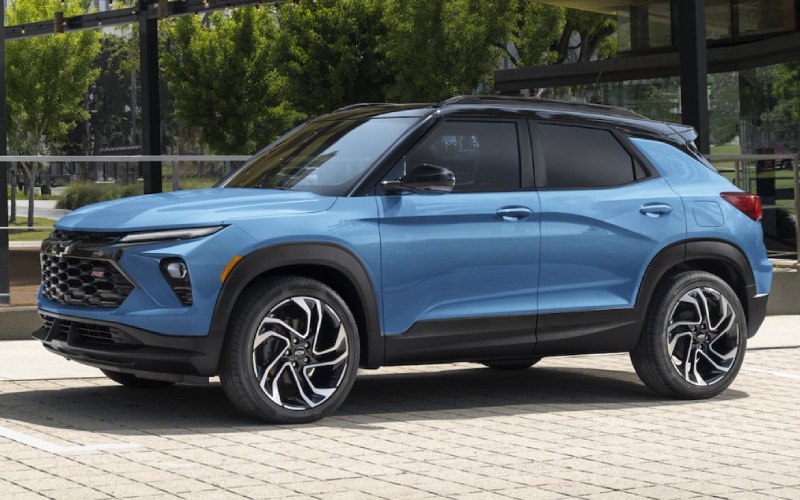
Alpine Chevrolet – Which small SUV offers more cargo flexibility for weekend getaways near Arvada, CO?
Weekend gear can be awkward — skis, boards, mountain bikes, strollers, flat-pack furniture — and the right compact SUV makes a big difference. If you are comparing Trailblazer and HR-V around Arvada, CO, the most common question we hear is simple: which one adapts better to real cargo-life without feeling cumbersome to drive?
The Trailblazer’s secret is how effectively its cabin transforms. A standard fold-flat front passenger seat unlocks up to 8.5 feet of max cargo length, allowing long items to ride diagonally while the 40/60 rear seat still carries a passenger. That combination is a rare find in the segment. Pair it with a low load floor and an available hands-free power liftgate for smooth loading when your hands are full. Inside, a standard 11-inch diagonal HD color touch-screen brings wireless Apple CarPlay® and Android Auto™ compatibility into easy reach, and an available Bose audio system elevates the soundtrack for every mile.
HR-V counters with a clean, quiet interior and a thoughtful mix of comfort features. Heated front seats are standard on Sport and EX-L, while EX-L also adds dual-zone climate control, an 8-speaker audio system, Smart Entry with Walk Away Auto Lock®, and parking sensors. It is a smart commuter with available Real Time AWD™ for winter days, and its cabin is straightforward to use. Still, HR-V does not offer a fold-flat front passenger seat or a hands-free power liftgate, two features that streamline life when your cargo list includes skis one day and a tall houseplant the next.
For families plotting weekend escapes, consider how the vehicles handle overlapping needs — people plus gear — not just maximum volume on paper. Trailblazer’s long-load capability means you can keep a child seat in place on one side of the back row and still carry a ladder or set of fishing rods. With the available hands-free power liftgate, opening the rear while holding a cooler or duffel is a one-step motion. These are small moments that add up to a less stressful Saturday.
- Cargo flexibility: Trailblazer’s fold-flat front passenger seat supports long items without removing child seats or improvising tie-downs.
- Loading ease: An available hands-free power liftgate on Trailblazer simplifies access when your arms are full.
- Everyday tech: A standard 11-inch HD touch-screen with wireless Apple CarPlay® and Android Auto™ helps keep trips organized.
- Winter readiness: Both offer available AWD, with Trailblazer adding selectable drive modes for tailored traction.
Frequently Asked Questions:
Does the Trailblazer really carry longer items than HR-V?
Yes. Trailblazer’s standard fold-flat front passenger seat allows items up to 8.5 feet to fit diagonally, which the HR-V does not match. It is the difference between wrestling a ladder and simply closing the hatch.
Is AWD available on both models for ski trips?
Yes. Trailblazer offers available AWD with selectable drive modes, and HR-V offers available Real Time AWD™. Both bring confidence for icy lots and slushy commutes.
Which one has more user-friendly tech for families?
Trailblazer fits a standard 11-inch HD color touch-screen with wireless Apple CarPlay® and Android Auto™ compatibility across the lineup, so navigation and playlists are always a tap away. HR-V’s larger screen is limited to upper trims and does not match the 11-inch standard size.
What if I care about audio quality on road trips?
Trailblazer offers an available Bose premium audio system for a crisp, immersive soundstage. HR-V provides an 8-speaker system on EX-L but does not offer a branded upgrade.
When cargo flexibility is the deciding factor, Trailblazer’s interior solutions and convenience features tend to win the weekend. If you are mapping out your next hike, powder day, or hardware run, the cabin that adapts fastest will earn your loyalty. Alpine Chevrolet is serving Commerce City, Denver, and Arvada with expert guidance on trims and accessories to tailor a small SUV to your life — and we are ready to load it up side-by-side so you can see the differences for yourself.
Have more questions or want to compare specific trims? Our team is happy to talk through features and set up a drive route that mirrors your daily routine, from school drop-off to the on-ramp and out to your favorite trailhead.
Request more 2026 Chevrolet Trailblazer information

Alpine Chevrolet – Which compact SUV offers smarter everyday tech for Denver, CO drivers?
When shoppers compare compact SUVs for modern commuting and weekend duty, one question surfaces quickly: which model delivers smarter everyday technology you can count on without a learning curve? Looking at the newest generation of Chevrolet’s small SUV alongside Toyota’s, the differences show up where it matters most — the screens you touch, the voice you talk to, and the visibility tech that lowers stress in tight spaces.
Chevrolet equips its compact SUV with an 11.3-inch diagonal infotainment touch-screen and pairs it to an 11-inch diagonal driver display, so your most-used information remains large and legible. Google built-in adds native Google Assistant voice commands, Google Maps navigation, and Google Play apps — no phone required — while Wireless Apple CarPlay® and Android Auto™ support are there the instant you want them. Toyota’s system responds quickly and offers wireless smartphone integration too, but Chevrolet’s choice to make a larger screen standard and bundle Google services natively reduces friction day to day. That extends to available features like HD Surround Vision and a Rear Camera Mirror, which expand your view where it’s needed most — parking garages, angled alleys, and busy curb lanes.
- Screen strategy: Chevrolet makes a large 11.3-inch diagonal infotainment display standard across trims; Toyota offers multiple sizes depending on trim.
- Voice integration: Google built-in enables native navigation, media, and smart-home style commands without relying on your phone.
- Parking confidence: Available HD Surround Vision and a Rear Camera Mirror help with crowded urban spaces and obstructed sightlines.
- Everyday flow: Wireless Apple CarPlay® and Android Auto™ connectivity keep your routine fast and cable-free in both vehicles.
Beyond the highlights, consider how each system supports the way you move through a day. Do you prefer to say “Hey Google” and get route options with live traffic, control climate settings by voice, and download apps directly to the vehicle? Or do you mostly mirror your phone and want a simple, reliable connection every time you start the engine? Chevrolet’s approach caters to both scenarios, with native Google features ready even when your phone stays in your pocket and fingertip controls sized for quick, accurate taps.
It’s also worth noting how visibility technology reshapes the driving experience. A 360-degree bird’s-eye view can spare you from guesswork when you’re aligning with a curb or watching for low posts; a streaming rearview mirror can eliminate the anxiety that comes when luggage or passengers block your line of sight. These technologies don’t just sound impressive — they make dense urban driving feel more manageable, especially in older garages with tight ramps and narrow columns.
Choosing the smarter tech setup comes down to consistency: the tech that’s there on every trim, the voice assistant you’ll actually use, and the camera views that turn stressful moments into routine tasks. If you prioritize big, bright screens you don’t have to special-order and a voice platform you already know, Chevrolet’s configuration offers compelling clarity for daily life in and around the city.
Alpine Chevrolet, serving Commerce City, Denver, and Arvada, can demonstrate these systems side by side so you can see how quickly they fit your routine. We’ll show you how the native voice assistant handles multi-stop errands, how HD Surround Vision frames obstacles in low light, and how a streaming mirror widens your view when cargo fills the back. Bring your phone to test wireless pairing and run your favorite apps — it’s the simplest way to decide which setup feels right for your day.
Frequently Asked Questions:
Can I use Google Maps navigation without my phone connected?
Yes — with Google built-in, you can launch Google Maps directly from the vehicle, save locations, and get live traffic updates without connecting your smartphone.
Do both SUVs support Wireless Apple CarPlay® and Android Auto™?
Yes. Both support wireless smartphone integration, so you can access apps, calls, and messages without plugging in.
What helps most with city parking and tight alleys?
A combination of an available HD Surround Vision camera system and a Rear Camera Mirror significantly improves low-speed visibility, making close-quarters maneuvers feel more precise.
Request more 2026 Chevrolet Equinox information
Which small SUV fits Colorado life better, the 2026 Chevrolet Trax or the 2026 Mazda CX-30 for Denver, CO?
Alpine Chevrolet – Which small SUV fits Colorado life better, the 2026 Chevrolet Trax or the 2026 Mazda CX-30 for Denver, CO?
When shoppers ask which small SUV fits Colorado life better between the 2026 Chevrolet Trax and the 2026 Mazda CX-30, we focus on how each model answers daily needs across city streets, highways, and weekend getaways. The Trax leans into modern connectivity and packaging that simplify every trip: standard wireless Apple CarPlay and Android Auto, an available 11-inch center display, and a flexible cargo hold that accommodates pickup soccer gear, hiking packs, or a spontaneous antique find. The CX-30 counters with refined materials, standard all-wheel drive, and an available turbo engine that appeals to drivers who prioritize brisk acceleration and poised handling. In practice, both are strong; the difference is how seamlessly the Trax reduces everyday friction.
Start with the basics drivers touch constantly. The Trax cabin is intentionally laid out so common tasks take fewer steps. Pairing a phone happens once, then stays rock solid day to day. Menus are clean and quick to navigate, and Active Noise Cancellation helps keep conversations natural even at highway speeds. The CX-30 integrates similar features, including wireless smartphone connectivity on select trims, but its interface centers around a console control and a 10.25-inch display rather than a larger, touch-forward screen. For many shoppers, that single difference affects how gracefully navigation, music, and calls work during busy commutes or late-night drives.
- Everyday connectivity: The Trax makes wireless phone integration standard, while the CX-30 offers it depending on trim.
- Display approach: Trax offers an available 11-inch center HD screen; CX-30 features a 10.25-inch center display with a console controller.
- Cargo flexibility: Trax provides 50+ cu. ft. of max space with its 60/40 split; CX-30 offers generous but smaller overall volume.
- Road composure: Trax tuning emphasizes calm, predictable responses; CX-30 turns in a sportier feel with standard AWD traction.
So which one is the better pick for Denver, CO drivers who balance weekday errands with weekend plans? If you prize a cabin that stays quiet, tech that feels intuitive from day one, and a cargo area that just seems to fit what you bring, the Trax is the easy choice. If your top priority is standard all-wheel drive and a sport-leaning ride, the CX-30 deserves a look, particularly in its available turbo variants. Most of the time, however, shoppers who take back-to-back test drives mention how relaxed the Trax feels to live with and how directly it supports their routines without asking for extra attention.
Frequently Asked Questions:
Does the Trax have the advanced safety features I need for four-season driving?
Yes. The Trax includes a robust suite of driver assistance technologies designed to help you stay aware and respond quickly, with clear alerts and lighting that adapts to changing visibility. Its calm road feel and straightforward controls also help reduce fatigue when the weather turns.
How do the infotainment systems compare for daily use?
The Trax’s standard wireless phone integration and available 11-inch center display are built for glanceable, tap-friendly use. CX-30 offers a 10.25-inch display operated primarily by a console control, which some drivers like, but many find the Trax’s touch-forward approach faster and more natural.
Will the Trax handle my weekend gear without a squeeze?
With 60/40 rear seats and over 50 cu. ft. of max cargo space, the Trax manages camping gear, strollers, and grocery runs with ease. CX-30 is flexible too, but it offers less total volume, which matters when bulky items or multiple bags are part of your regular plans.
At the end of the day, the right choice reflects how you actually use your small SUV. For the majority of drivers who want smart tech, a roomier cargo area, and a calm, confidence-inspiring drive, the 2026 Chevrolet Trax makes the stronger everyday companion. Alpine Chevrolet is serving Commerce City, Denver, and Arvada with side-by-side comparisons, hands-on tech demos, and test routes that highlight the differences you care about most. See how the Trax supports your whole week, from early meetings to sunset hikes, with fewer steps and more ease.
Request more 2026 Chevrolet Trax information
Alpine Chevrolet – Which full-size SUV has the most cargo room for Arvada, CO families?
For many families comparing full-size, three-row SUVs, the most practical question isn’t about peak horsepower or wheel size. It’s about how much you can carry, how easily it loads, and how adaptable the cabin feels with real-world gear. When you line up the 2026 Chevy Tahoe against the 2026 Toyota Sequoia, cargo space and flexibility quickly become the difference makers. Tahoe offers an expansive 122.7 cu. ft. of maximum cargo room, with thoughtful storage touches like an available Power Sliding Center Console and smart underfloor spaces. Sequoia’s sliding third row is useful for striking a balance between legroom and luggage, but its maximum cargo capacity of 86.9 cu. ft. simply doesn’t stretch as far for bulky items, long skis, or multiple strollers.
Cargo capacity is just one side of the story. Interior configurability and tech also shape how easy it is to live with a big SUV. Tahoe can seat up to nine in LS, a huge advantage for carpool duty or large families. The best-in-class 17.7-inch center touch-screen with Google built-in keeps maps and media within direct reach, while Wireless Apple CarPlay® and Wireless Android Auto™ minimize cord clutter. Available up to 14 camera views provide confidence in cramped parking lots and tight trailheads. Sequoia’s available 14-inch Toyota Audio Multimedia display and available JBL® audio deliver strong infotainment, and the available digital rearview mirror is a nice touch, but it doesn’t change the fact that the larger cargo hold and nine-passenger capability make Tahoe a more flexible family tool.
- Cargo capacity advantage: Tahoe’s 122.7 cu. ft. outpaces Sequoia’s 86.9 cu. ft. for road trips, DIY projects, and outdoor gear.
- Seating flexibility: Tahoe LS can accommodate up to nine, while Sequoia offers up to eight depending on configuration.
- Loading made easier: Tahoe’s available AutoSense Power Liftgate and low load floor streamline grocery runs and sports equipment.
- Camera coverage: Tahoe’s available up to 14 camera views simplify hitching, backing, and navigating tight spaces.
- Display clarity: A best-in-class 17.7-inch screen in Tahoe keeps navigation and entertainment front and center.
Beyond space and convenience, driver assistance technology can make a big SUV feel smaller from behind the wheel. Tahoe’s available Super Cruise® hands-free driver assistance technology adds a new dimension to longer commutes and weekend getaways by handling compatible highways, even when towing. Pair that with an available class-leading 15-inch Head-Up Display and the vehicle feels tailored for low-stress travel. Sequoia’s Toyota Safety Sense™ 2.5 delivers comprehensive active safety, including Full-Speed Range Dynamic Radar Cruise Control and Lane Tracing Assist, and it offers robust off-road upgrades on the right trims. Still, if your checklist is centered on school pickup lines, big-box-store parking lots, youth sports tournaments, and I-70 westbound traffic, Tahoe’s combination of cargo space, seating capacity, and driver assist options is uniquely aligned with everyday life.
Our local shoppers often ask a follow-up—how do these advantages hold up when the SUV doubles as a tow vehicle and a long-distance hauler? Tahoe’s available trailering technology, up to 14 camera views, and refined ride systems like Magnetic Ride Control with available Four-Corner Air Ride Adaptive Suspension contribute to relaxed miles and confident control. Sequoia’s i-FORCE MAX hybrid is very capable and delivers strong torque, but Tahoe’s breadth of chassis tuning and camera coverage makes the whole process—from lining up the hitch to backing into a campsite—feel notably more intuitive. That intuitive feel is hard to quantify, but easy to appreciate at the end of a long trip.
Ready to see how space, seating, and ease-of-use translate to your routine? Alpine Chevrolet is serving Commerce City, Denver, and Arvada with side-by-side walkarounds and test drives that focus on the details families care about most. We can help you compare configurations and tech in person, so you can make a confident decision on the SUV that will shoulder your daily adventures.
Frequently Asked Questions:
Can the Tahoe’s cargo area handle long items like skis without folding every seat?
Yes. Tahoe’s 60/40 split second and third rows allow you to carry long items while still keeping multiple seating positions available.
Is hands-free driving available on Tahoe for long highway stretches?
On properly equipped trims, Super Cruise® is available and supports hands-free driving on compatible roads, adding a welcome layer of calm to busy travel days.
Does Sequoia offer a third-row that adjusts for comfort?
Yes. Sequoia features a power third row that slides forward and back to balance cargo space with passenger legroom, which is helpful for mixed passenger and gear trips.
Request more 2026 Chevrolet Tahoe information

Alpine Chevrolet – Which three-row SUV has the better hands-free tech for Denver, CO families?
Hands-free driving is no longer a concept reserved for luxury nameplates—it is a family feature that changes how long trips and daily commutes feel. If you are weighing Chevrolet’s Super Cruise® against Hyundai’s driver-assistance systems on the latest three-row SUVs, here is a clear, practical look at what each offers and how it affects everyday life in and around Denver, CO.
On the 2026 Traverse, Super Cruise® is available on select trims and works on more than 585,000 miles of compatible roads across the U.S. and Canada. It enables hands-free driving under proper conditions, actively monitoring driver attention while managing steering and speed. Pair that with the Traverse’s standard 17.7-inch diagonal color touch-screen, an 11-inch diagonal Driver Information Center, Google built-in, and available HD Surround Vision, and you get a family SUV that turns long, tiring stints into calmer, better-organized time together. Hyundai equips the 2026 Palisade with an expanded SmartSense suite—navigation-aware cruise control, lane centering, parking assists, and more—plus thoughtful features like a built-in Dash Cam and ten airbags. These are comprehensive, confidence-inspiring systems, yet they remain hands-on. For families who want genuine hands-free capability without changing segments, the Traverse stands apart.
How does hands-free driving change your routine? Start with the segments that wear you out—multi-hour cruising on I-70, overnight road trips, or frequent front-range commutes. The Traverse’s Super Cruise® takes over the steady-state work of lane keeping and speed management on compatible roads, so you can focus on awareness rather than micromanaging every minor correction. In dense traffic or complex streets, the Traverse also layers in Chevy Safety Assist and over 20 standard safety and driver assistance features to support you when conditions are not hands-free. The Palisade’s feature set is robust and easy to live with, but it does not offer hands-free operation. That single distinction becomes a daily advantage if your life includes long, open-road segments with family aboard.
Beyond the driver-assistance question, both SUVs bring plenty to families—seating flexibility, modern connectivity, and towing confidence. The Traverse’s best-in-class 98 cu. ft. max cargo volume and available One-Touch Fold second-row seats with power-folding second- and third-row functionality turn the school-gear-to-weekend-gear shuffle into a smooth, repeatable process. Palisade adds comfort-forward ideas like available Relaxation seats and a premium audio option that make time in the cabin feel special. Your decision often comes down to how you drive most: if your miles skew longer and straighter, Super Cruise® on the Traverse can be the difference-maker you feel every week.
Frequently Asked Questions:
Is Super Cruise® standard on the Traverse?
Super Cruise® is available on select trims of the 2026 Traverse and included with the Enhanced Driving Package on RS and High Country.
Does the Palisade offer hands-free driving?
No. The 2026 Palisade provides a wide range of driver-assistance features, but they are hands-on systems that require the driver to steer and remain actively engaged at all times.
What other tech helps on busy days?
The Traverse’s standard 17.7-inch diagonal touch-screen, 11-inch diagonal Driver Information Center, Google built-in, and available HD Surround Vision help simplify navigation, parking, and passenger management—features families appreciate on every trip.
Ready to compare in person? Visit our showroom at Alpine Chevrolet—serving Commerce City, Denver, and Arvada—and see how the Traverse’s hands-free capability fits your life. From test-drive route planning to feature setup, our team is here to help you get the most from your next family SUV.

